
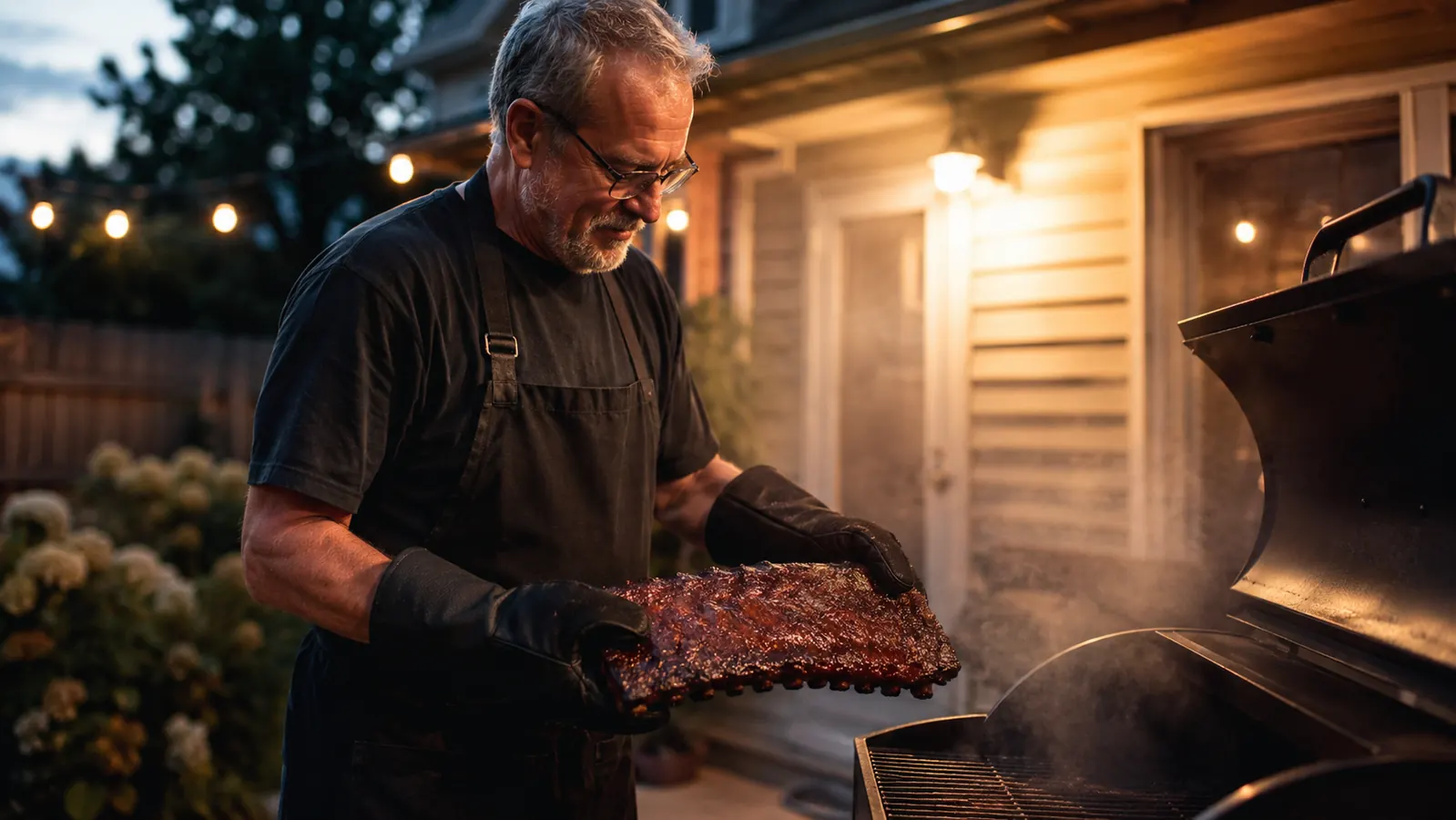
I've handled a lot of hot meat off a lot of grills over thirty-some years, and I can tell you exactly which mistakes leave a mark. A twelve-pound turkey that shifts wrong halfway off the grate. A cast iron pan you grab for two extra seconds because the handle looked cool from where you were standing. A whole rack of ribs that starts to slide right as you're carrying it to the platter. None of that is about being clumsy. It's about not having the right gear on your hands, or having the right gear but not knowing how to actually use it.
This guide is the method I use every single time I move something hot off the Pit Boss or the kettle, and it starts with a real pair of heat-resistant grill gloves, the kind rated for actual grill and smoker temperatures, not a kitchen oven mitt that was never built for this job. I run RAPICCA's 932 degree neoprene gloves for anything hot coming off my grill, and below is the exact five-step process that's kept my hands, and my dinner, in one piece for years.
I didn't always take this seriously. For years I used whatever was sitting on the kitchen counter, a folded dish towel more often than not, and I got away with it right up until the Fourth of July I mentioned. That one still shows up on my forearm on a hot day. It wasn't a huge mistake, just a normal one, the kind almost every backyard griller makes at some point. The difference now is I don't leave it to luck anymore.
Don't let a hot rack of ribs decide who's tougher
This whole method only works if the gloves you're wearing are actually rated for the heat you're handling. RAPICCA's 932F neoprene gloves are what I reach for every time something hot needs to come off the grate.
Amazon Check Today's Price on Amazon →Step 1: Match the Glove to the Actual Heat, Not the Guess
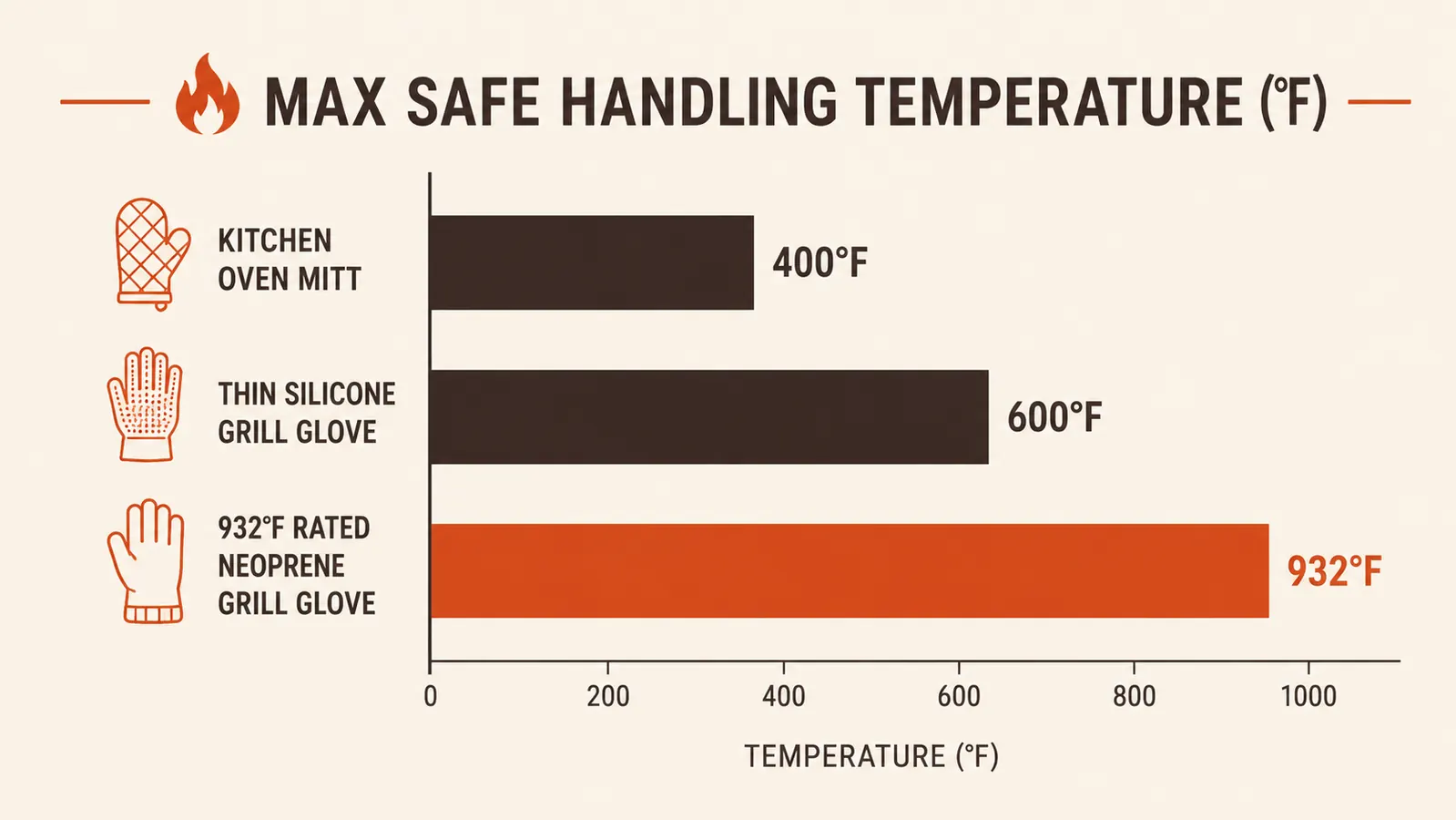
The first mistake most people make happens before the grill is even lit. They reach for whatever's closest, a kitchen oven mitt, a folded dish towel, a thin silicone glove meant for pulling a casserole out of a 350 degree oven. Grate temps on a hot kettle running wide open can push past 600 degrees, and a cast iron pan or a metal rack sitting directly on that grate can hold heat that high or higher. A regular oven mitt simply wasn't built for that, and thin fabric heats through faster than you'd think, especially if there's any grease or moisture involved.
What actually matters is the glove's rated temperature. I keep a pair of RAPICCA neoprene grill gloves, rated to 932 degrees Fahrenheit, hanging on a hook right on my grill cart, and that number isn't marketing fluff, it's the difference between confidently grabbing a hot grate insert and hesitating with a towel wrapped around my hand hoping for the best. Before you ever handle hot meat or hot cookware off the grill, know what your gloves are actually rated for. If you don't know the number, assume they're not rated for grill work at all.
This matters more than people expect with anything metal touching the fire directly, a cast iron skillet, a grate basket, a rib rack, a drip pan pulled from under a brisket. Meat itself, even straight off a 275 degree smoker, is nowhere near as hot as a piece of metal that's been sitting over direct heat, so the glove that handles your chicken fine might not be enough for the pan it was cooked in.
Material matters too, not just the temperature number on the tag. Thin silicone gloves are fine for pulling a tray of vegetables off a warm grate, but they tend to be stiff and give you less feel for what you're actually gripping. Neoprene, the material RAPICCA uses, stays more flexible even at high heat, so I can still feel the shape of what I'm holding, whether that's a slippery rack of ribs or the curved handle of a Dutch oven, instead of fumbling with a rigid glove that doesn't bend where my fingers do.
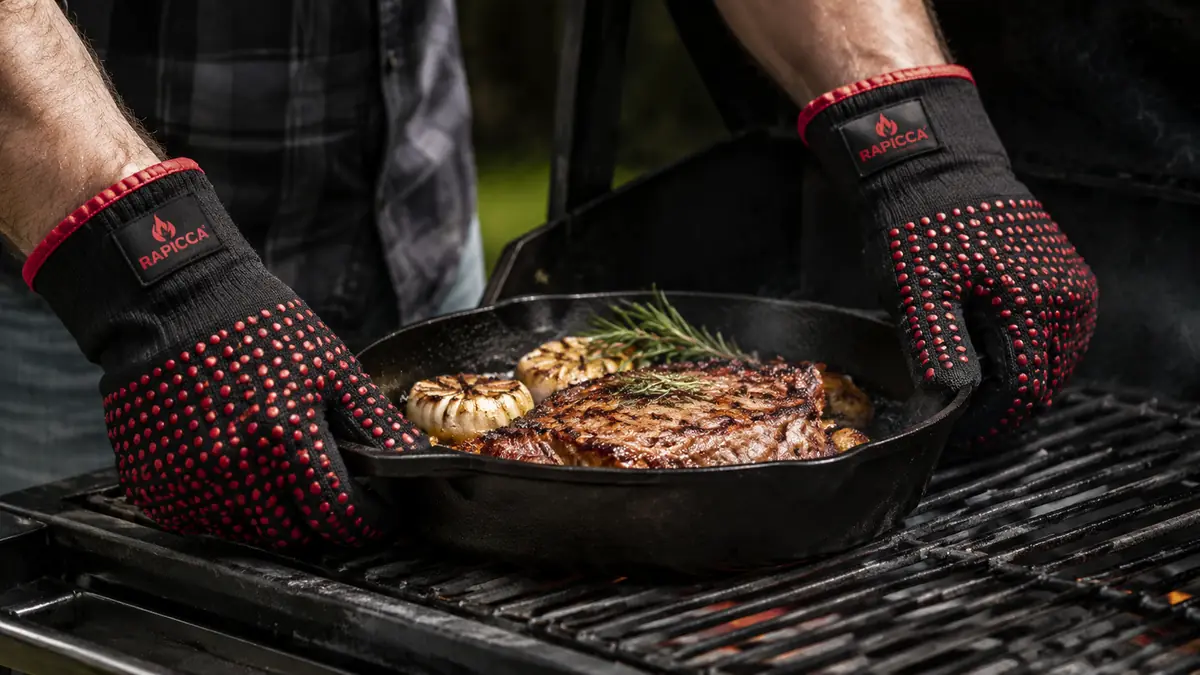
Step 2: Dry Your Hands and the Glove Before You Grab Anything
This one sounds small and it isn't. Neoprene and most heat-resistant materials work by trapping a layer of insulation between your skin and the heat source, but that insulation gets a lot less effective when it's wet. I learned this the hard way pulling a pan of drippings off the Weber after rinsing my hands at the hose and not fully drying off before putting the gloves back on. Steam and moisture conduct heat faster than dry material, and a damp glove interior can turn a safe three-second grab into a genuinely painful one.
Before I handle anything hot, I make sure both my hands and the inside of the gloves are dry. If I've been basting or spraying down a brisket with apple juice, I wipe my hands on a towel first. If the gloves themselves got splashed while I was cleaning up around the grill, I give them a minute to air out before using them again. It's a fifteen second habit that costs you nothing and prevents the exact kind of surprise burn that happens when you think you're protected and you're not.
Step 3: Cradle, Don't Pinch, When You're Lifting Whole Cuts
Whole chickens, a full turkey, a rack of ribs, a pork shoulder that's been on the smoker for ten hours and is falling-apart tender, these are the moves that go wrong most often, and it's usually because someone tries to pinch the meat between two fingertips like they're lifting a sandwich instead of using the full width of a gloved hand and forearm to support it from underneath. Tender, well-cooked meat has almost no structural strength left. If you grab it wrong, it tears, and torn meat over a hot grate means grease flare-ups and a mess you didn't need.
My method is simple. I slide both gloved hands underneath the cut, palms flat, fingers spread, so the full weight is riding on a broad surface instead of a couple fingers. For a whole chicken or a small turkey, that means one hand supporting near the legs and one near the shoulders, lifting together in one smooth motion rather than tipping it up from one end. For a rack of ribs, I support it at both ends at once so it doesn't sag and split down the middle on the way to the platter.
I also plan the landing spot before I lift anything, not after. Diane's platter is sitting on the side table, cleared and ready, before that turkey ever comes off the Pit Boss. The two or three seconds you spend deciding where hot meat is going to land while you're already holding it is exactly when things get dropped.
Heavier cuts change the math a little. A full Thanksgiving turkey or a whole packer brisket can run fifteen pounds or more, and holding that weight steady in two gloved hands for even a short carry puts real strain on your wrists if you're not braced for it. I keep my elbows tucked in close to my body rather than reaching out with straight arms, which gives me a lot more control and a lot less shake on the walk from the grill to the table.
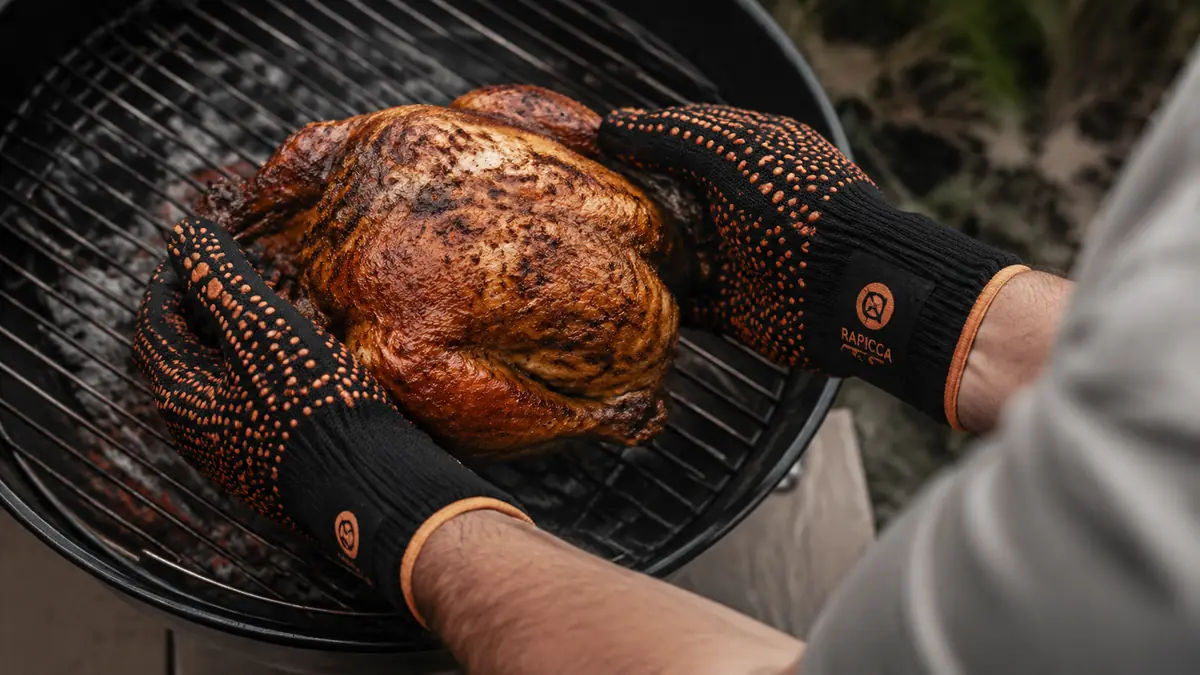
Step 4: Move With Purpose, Not With Hesitation
Good grill gloves buy you time, they don't buy you unlimited time. Even a 932 degree rated glove is meant for confident, deliberate handling, not standing there holding a scorching cast iron handle while you decide what to do next. The gloves give you the window to move something hot from point A to point B without pain. What you do inside that window still matters.
I treat every hot lift the same way, whether it's a full rack of ribs or a Dutch oven full of beans that's been sitting in the coals. I grip firm, I lift in one motion, I walk it directly to where it's going, and I set it down. No pausing halfway to answer a question, no shifting my grip mid-carry because I picked it up wrong the first time. Eli knows by now that when I'm carrying something off the grill, that's not the moment to ask me anything, he waits until it's down.
This is also where the extended cuff on a good pair of grill gloves earns its keep. RAPICCA's gloves run 14 inches, which covers well past the wrist, and that matters more than people think when you're reaching over an open flame or past a hot grate to grab something toward the back of the cooking surface. A short glove leaves your forearm exposed right at the moment you're leaning in closest to the heat.
Step 5: Inspect, Clean and Dry the Gloves After Every Cook
A grill glove that's protecting you today can fail you next month if it's not taken care of. Grease, marinade and repeated heat exposure break down materials over time, and a glove with a hidden crack or a thinning spot in the palm isn't going to give you the protection the rating on the tag promises. After every cook where I've used mine for actual hot handling, I take thirty seconds to check them over, running my fingers across the palm and fingers feeling for any stiff spots, cracks or thin patches before I hang them back up.
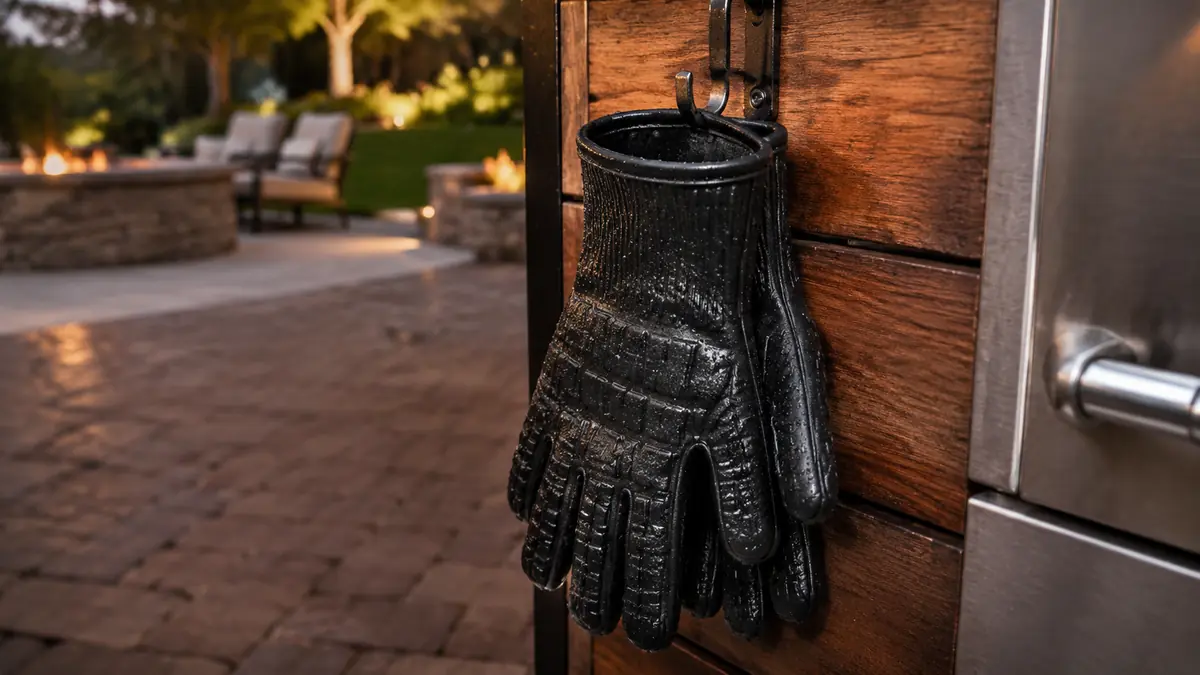
RAPICCA's gloves are oil resistant and waterproof, so I can rinse mine off under the hose after a greasy cook, wipe them down, and hang them to dry rather than tossing them in a drawer still damp. I keep mine on a hook mounted to the side of the grill cart, out of direct sun and away from the firebox, not draped over the grill lid where residual heat can keep working on the material long after the cook is done. A five second sniff test matters too, if a glove starts smelling scorched or the material feels stiff and less flexible than it used to, that's your sign it's worked hard enough and it's time for a fresh pair.
What Else Helps
Good gloves handle the direct-contact part of the job, but a few other habits round out the whole safety picture around hot meat. I keep a dedicated set of long-handled tongs and a solid metal spatula within reach so I'm not relying on gloved hands alone for every single move, especially with smaller items like sausages or a single chop where tongs are simply faster and more precise. I also keep a heat-resistant mat or trivet on the side table so hot pans and racks have a safe landing spot the second they come off the grate, instead of resting directly on a wooden table or tablecloth.
I never carry hot meat through a crowd, not with Eli and his cousins running around the yard during a cookout. I call out that something hot is moving before I lift it, the same way I'd announce a hot pan coming out of the oven in the kitchen. And I keep a second pair of gloves nearby during big cookouts, because there's always a moment where Diane's pulling a side dish off the smoker at the same time I'm handling the main, and passing one pair back and forth just slows everybody down.
One last habit worth mentioning, don't wait until you're mid-cookout to find out your gloves are worn out or missing entirely. I do a quick check of my grill cart the morning of any bigger cook, thermometer batteries, propane or pellets, and yes, the gloves. It takes thirty seconds and it means I'm never standing at a hot grate with a pork shoulder in one hand and nothing safe to hold it with in the other.
The glove buys you the confidence to move fast. What you do with that confidence is still on you.
Get the gloves rated for the heat you're actually working with
Every step above depends on wearing gloves built for real grill and smoker temperatures, not a kitchen mitt that was never meant for this. RAPICCA's 932F neoprene gloves are the pair I trust with every hot rack, pan and bird that comes off my grill.
Amazon Check Today's Price on Amazon →