
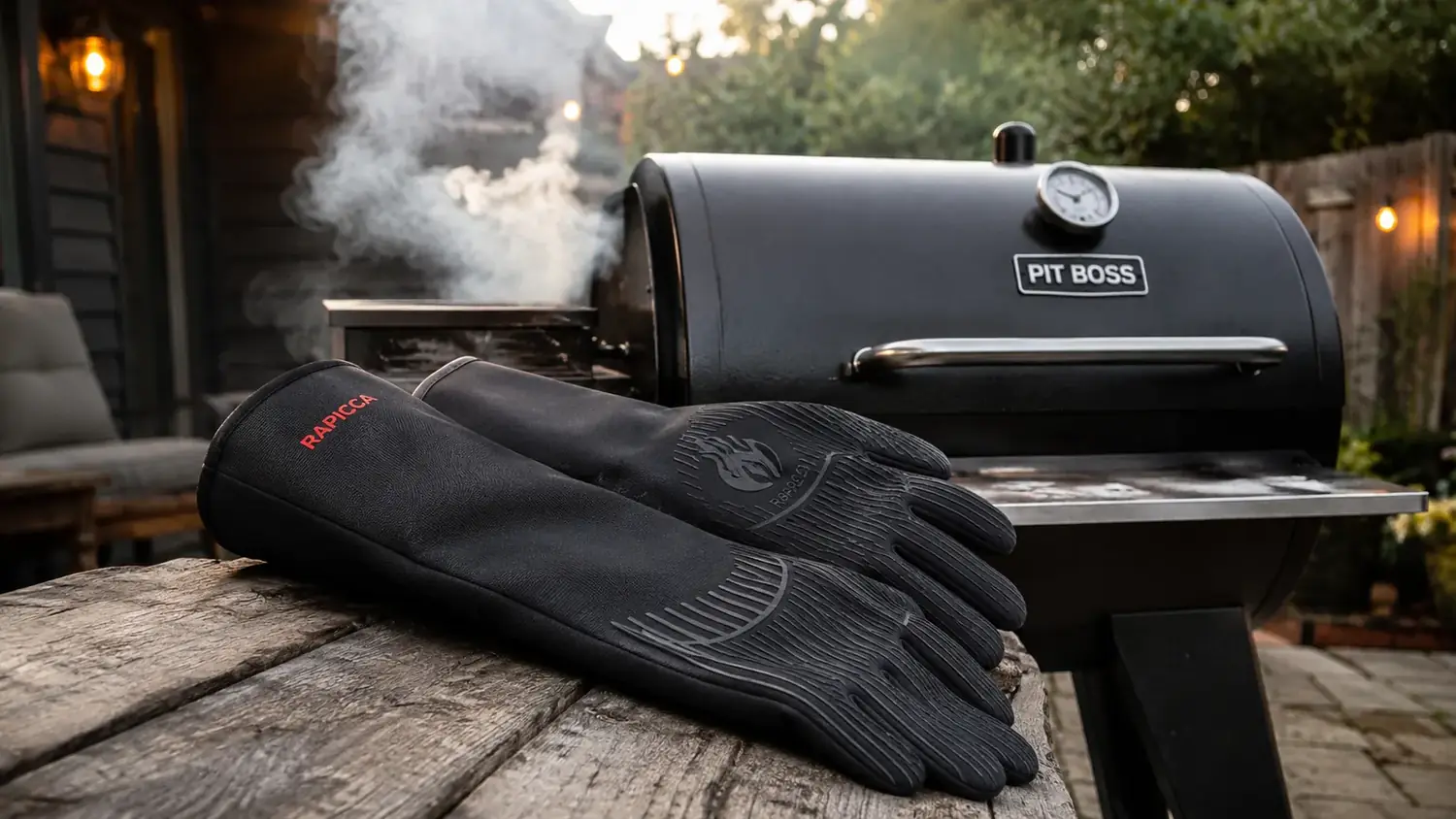
I've got a scar on my left forearm from a Fourth of July about fifteen years ago, the kind of thing you get when you reach across a hot Weber kettle with nothing but a folded dish towel between you and a 500-degree grate. Diane still brings it up every time I light the grill without gloves on. For most of my grilling life I treated hand protection like an afterthought, something you grabbed if it happened to be sitting on the counter. That changed the day I actually put on a real pair of heat-resistant grill gloves, the RAPICCA neoprene ones rated to 932 degrees, and realized how much of my grilling I'd been doing scared without knowing it.
Once I had the RAPICCA gloves built for actual grill heat instead of a kitchen towel or a thin cotton oven mitt, I stopped flinching every time I reached toward the firebox. I could move a full brisket, adjust a hot grate, or grab a cast iron skillet straight off the coals without thinking twice. Here are 10 reasons I think every backyard cook, whether you're running a pellet grill like my Pit Boss or a plain charcoal kettle, is better off with a real pair of heat-resistant gloves instead of whatever's closest on the counter.
Stop Reaching Into the Fire With a Dish Towel
A folded rag or thin oven mitt was never built for 900-degree grill heat. Real heat-resistant gloves are.
Amazon Check Today's Price on Amazon →They're Rated for Real Grill Heat, Not Kitchen Heat
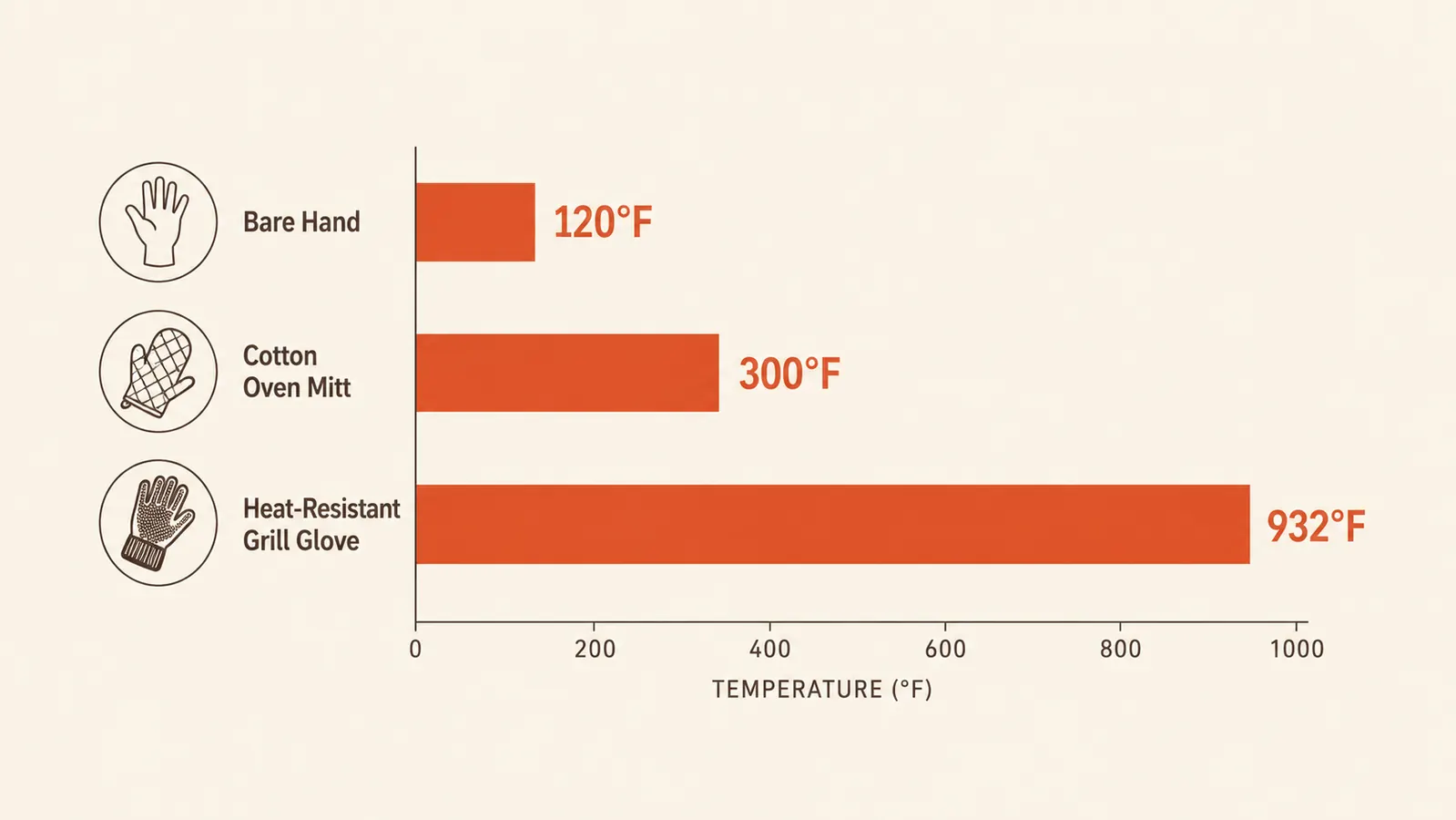
A cotton oven mitt is built for pulling a casserole out of a 350-degree oven, not handling a grate that's been sitting over open flame for an hour. The RAPICCA gloves are rated to 932 degrees Fahrenheit, which covers everything from a searing hot cast iron skillet to the metal handle on a Weber kettle lid after it's been closed for a low and slow cook. I didn't understand the gap between kitchen heat and grill heat until I felt the difference firsthand, and it's not small.
The 14-Inch Length Actually Protects Your Forearm
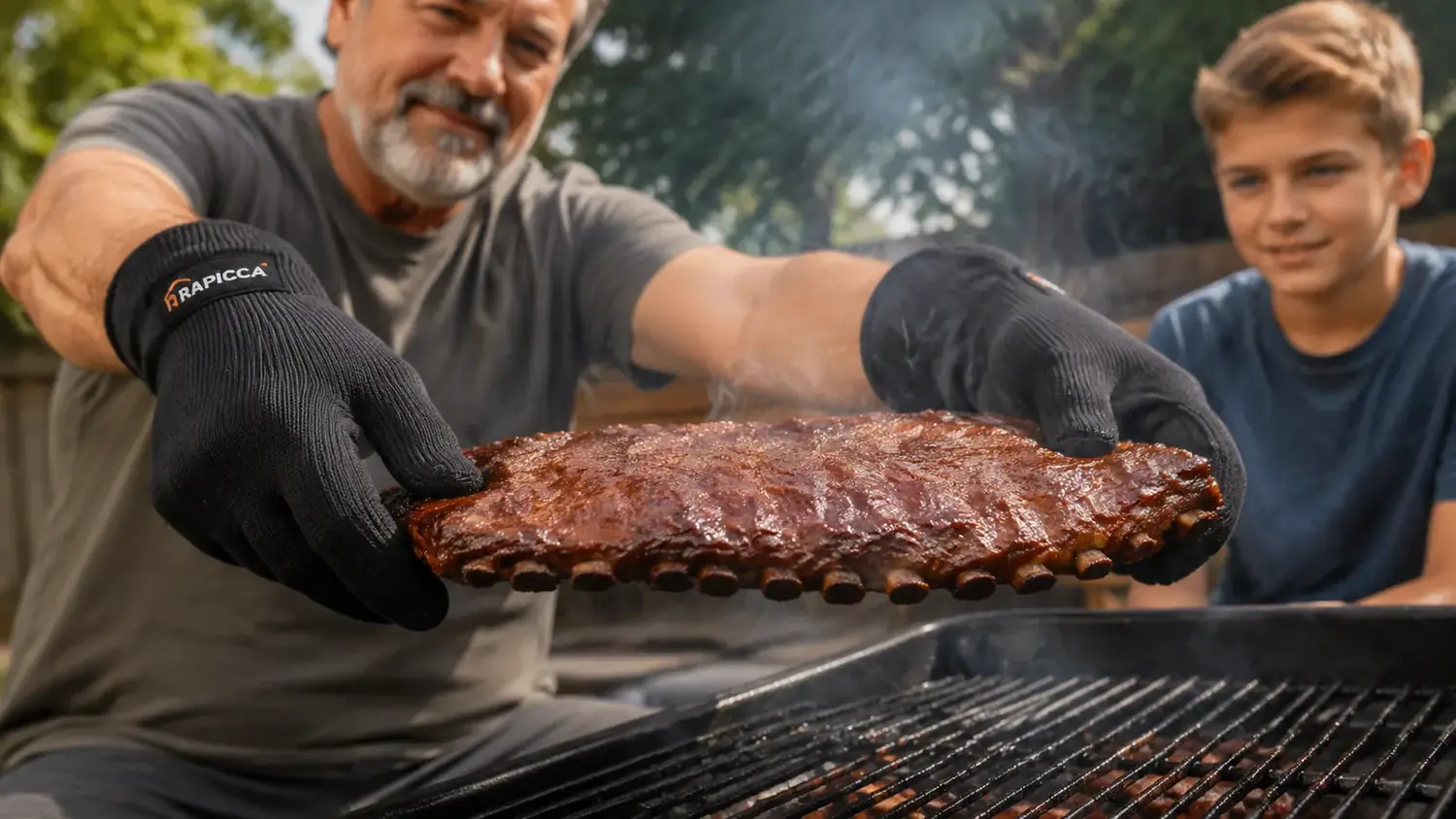
Most oven mitts stop at the wrist, which does you no good when you're leaning over a hot grate to flip a rack of ribs or adjust coals underneath a full spread of food. These gloves run 14 inches, long enough to cover most of my forearm, which is exactly where I've burned myself in the past reaching over an open kettle. That extra length is the difference between a confident reach and pulling your arm back at the last second.
You Can Handle Wet, Greasy Meat Without Losing Your Grip
Neoprene is naturally oil resistant and waterproof, which matters more than I expected the first time I had to move a whole turkey straight out of a pot of hot frying oil. A fabric glove soaks up grease and gets slippery fast. These stay grippy whether I'm handling a greasy brisket, a marinated rack of ribs, or a bird coming out of the fryer, and that grip is what keeps 12 pounds of meat from ending up on the patio instead of the platter.
You Can Ditch the Tongs for Jobs That Actually Need Hands
Tongs are great for flipping a burger, but they're clumsy for lifting a whole rack of ribs, repositioning a heavy cast iron pan, or moving a full water pan on my Pit Boss. With real heat-resistant gloves, I can just grab what I need with both hands the way I would in the kitchen, no fumbling with a tool that was never quite the right shape for the job in the first place.
They Work for Smoking, Frying, and Baking, Not Just Grilling
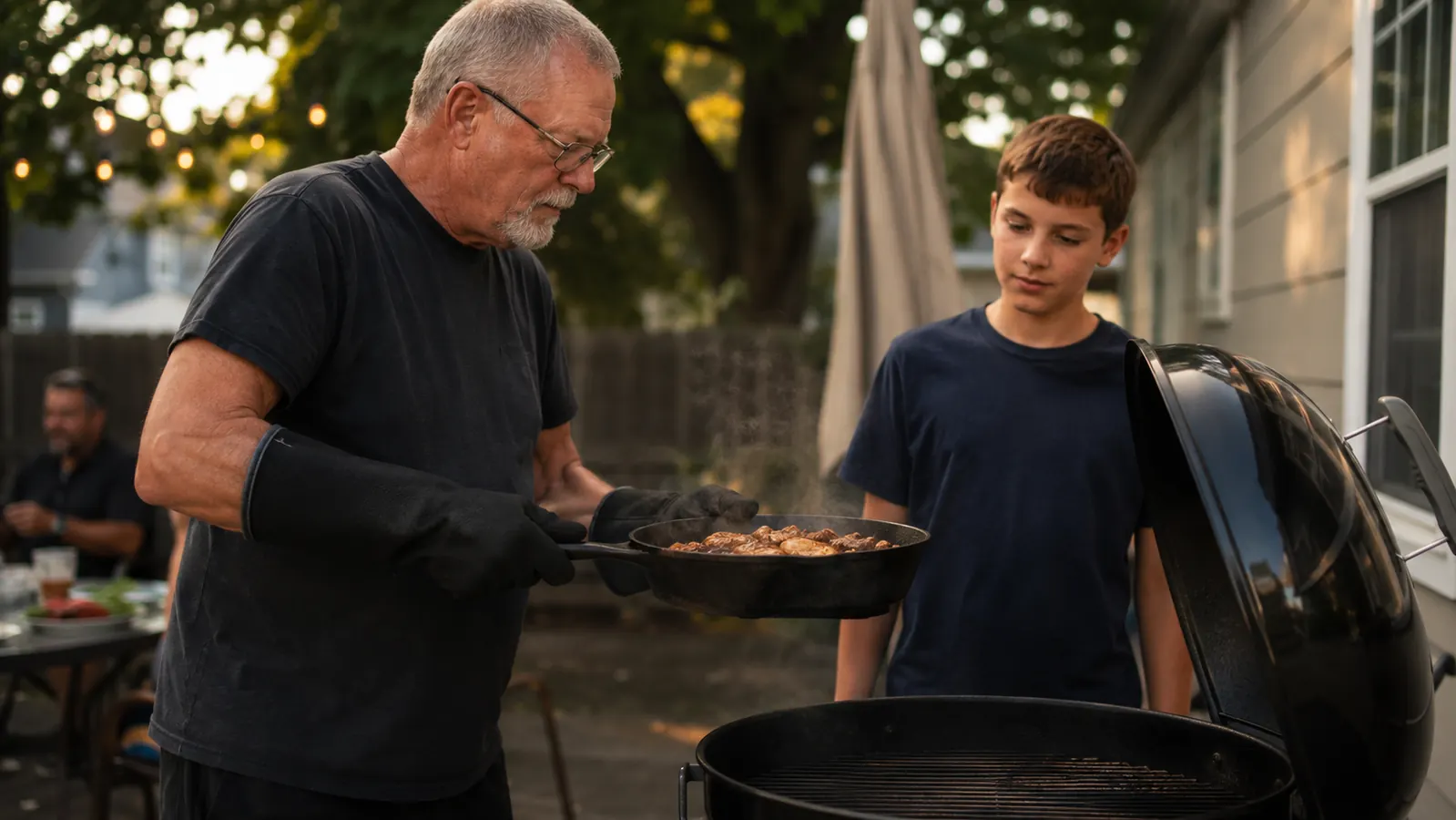
I use mine well beyond the grill now. Pulling a Dutch oven out of the smoker, handling a pot of hot frying oil for Thanksgiving turkey, even lifting a cast iron skillet off the stovetop when Diane's hands are full. A pair of gloves rated this high isn't a one-trick tool, it's become one of the most reached-for things in my whole outdoor kitchen setup.
You Stop Hesitating Around the Fire
This is the one that surprised me most. Once I trusted my gloves, I stopped second-guessing every move near the grate. I'll adjust a log in the firebox, shift a hot grate to check the coals, or grab a smoking chimney starter without that half-second pause I used to have when my hands weren't properly protected. That confidence changes how relaxed the whole cook feels, especially with Eli standing nearby wanting to help.
The Textured Grip Holds Even When Your Hands Are Wet
The palm and finger surface has a textured pattern instead of smooth neoprene, and it's kept me from dropping a slick rack of ribs or a rain-soaked grill lid more than once. On a humid Kansas City evening with sweat running down my arms, that grip has mattered as much as the heat rating itself. A glove that protects your skin but slides off whatever you're holding isn't actually doing its job.
One Pair Replaces a Drawer Full of Mismatched Mitts
Before these, I had a random rotation of oven mitts, a leather glove missing its match, and that dish towel I mentioned earlier. Now there's one pair that lives by the back door with the rest of my grill gear, and I'm never digging through a kitchen drawer mid-cook trying to find something that'll actually protect my hand. It's a small thing, but it's one less headache on a night when I've already got enough going on at the grate.
They Hold Up Season After Season
I've had mine through more than one full grilling season now, hot summers and a few late fall cooks included, and the neoprene hasn't cracked, torn, or lost its grip. Cheaper fabric gloves I owned before this would fray at the seams within a few months. These have taken the punishment of a real Kansas City grilling calendar and still look and perform like they did the first week I had them.
They're Cheap Insurance Against a Real Burn
At today's price, a pair of these gloves costs less than one urgent care visit copay, and a lot less than the scar I've been carrying around since that Fourth of July. I don't think about it as a grilling accessory anymore, I think about it as the same category as a smoke detector. You hope you never really need the protection, but you're a lot better off having it the one time you do.
What I'd Skip
I'd steer clear of any glove listing that doesn't give you a real temperature rating, just a vague claim like 'heat resistant' with no number behind it. I'd also skip anything advertised as one-size-fits-all with no length listed, because the forearm coverage is half the point. And I'd pass on fabric-only gloves for anything involving grease or frying oil, since fabric soaks liquid up fast and loses its grip right when you need it most. A real pair should tell you the exact temperature rating, the length, and the material up front, no guessing required. The RAPICCA pair lists a real 932 degree rating right on the cuff, which is exactly the kind of number I want to see before I trust a glove anywhere near the coals.
I carried a burn scar for fifteen years before I finally bought gloves built for actual grill heat. The scar didn't need to happen. Neither does yours.
Give Your Hands the Protection Your Grill Deserves
932-degree neoprene, 14 inches of forearm coverage, and a grip that holds up wet or greasy. Cheap insurance for a job that involves real fire.
Amazon Check Today's Price on Amazon →