
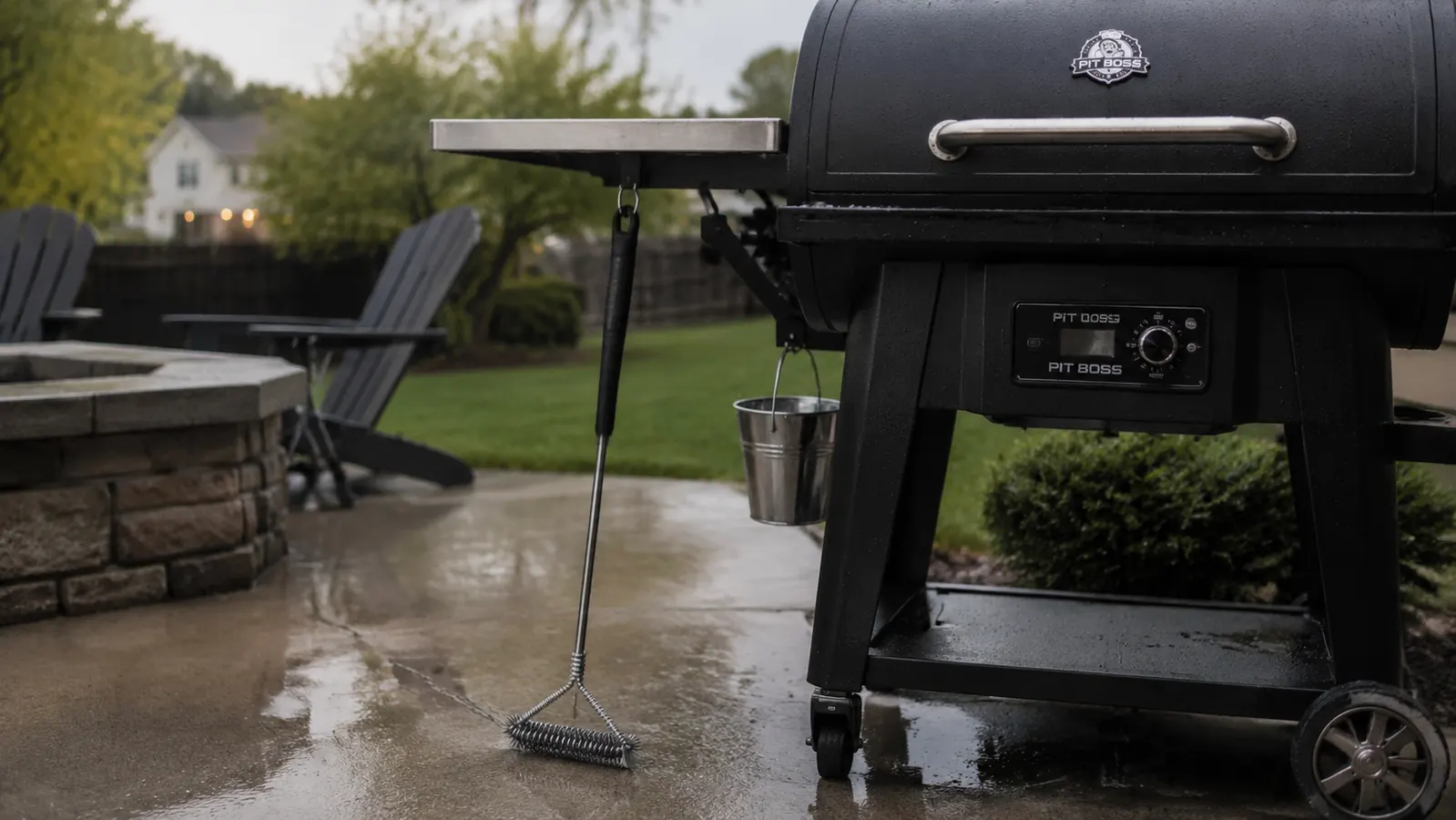
I'll be honest, when I finally caved and bought this bristle-free grill brush, it wasn't because a loose wire bristle almost ended up in somebody's mouth. It was my nephew Kyle's graduation cookout back in May, forty-some people crammed into my sister's backyard in Overland Park, and I was running my fourth batch of teriyaki-glazed chicken thighs on the Pit Boss when the glaze started caramelizing onto the grates faster than I could keep pace with. My brother-in-law leaned over the fence line and said, 'Why don't you get one of those bristle-free brushes, my buddy swears by his.' I'd been putting it off for months, honestly, because I've read enough five-star reviews on grill gear to know half of them are written by somebody who used the thing twice and never touched it again. So this is the version those five-star write-ups skip.
I bought the Weetiee bristle-free brush and scraper the following week with my own money, the 18-inch stainless one with the coiled bristle head and a flat scraper built into the same end. It's been living on my grill hook for close to five months now, splitting time between the Pit Boss and my 22-inch Weber kettle, and this review is about what actually happened when I put it up against real baked-on grease, not the light Tuesday-night burger residue that shows up in nearly every glowing five-star photo. There's a real difference between a brush that handles routine cleanup and one that earns its keep on the nights things go sideways, and that difference is what I want to lay out plainly here.
The Quick Verdict
It genuinely cut through the worst baked-on glaze I could throw at it, but it took real effort, showed a couple of honest flaws the five-star reviews leave out, and asks for a bit more care than the packaging suggests.
Amazon Check Today's Price →Wondering if this brush can actually handle the mess wire bristles used to chew through?
The Weetiee bristle-free brush and scraper is built to cut baked-on grease without the loose-wire risk. I put it through overnight teriyaki glaze and a rainstorm to see what it's really made of. Check the current listing for today's price and availability.
Amazon Check Today's Price on Amazon →The Reviews I Read Before I Bought It
Before I clicked buy, I did what I always do and scrolled straight past the five-star reviews to see what the three and four-star ones said, because that's usually where the honest details live. A handful mentioned the coil head unraveling after heavy use, a couple mentioned the handle getting warm, and one buyer flat out said it left a rust mark after being left outside during a storm. I filed all that away as the usual internet noise you can't fully trust either way, since you never know how someone was actually using the thing or how long they'd owned it. Turns out, once I put in my own five months, every one of those complaints had at least a kernel of truth to it, which is exactly why I wanted this review to go back and confirm or knock down each one specifically rather than just gushing about how clean my grates looked on day one.
What those scattered complaints didn't tell me, though, was how the Weetiee would hold up against something genuinely hard, like overnight glaze, versus how it handles routine grease. A three-star review complaining the coil loosened doesn't tell you whether that person was scrubbing lightly once a week or attacking baked-on rib glaze every weekend the way I do. So I decided the fairest thing I could do was test it across the full range myself and report back with actual numbers instead of a star rating and a one-line comment.
How I Actually Tested This One
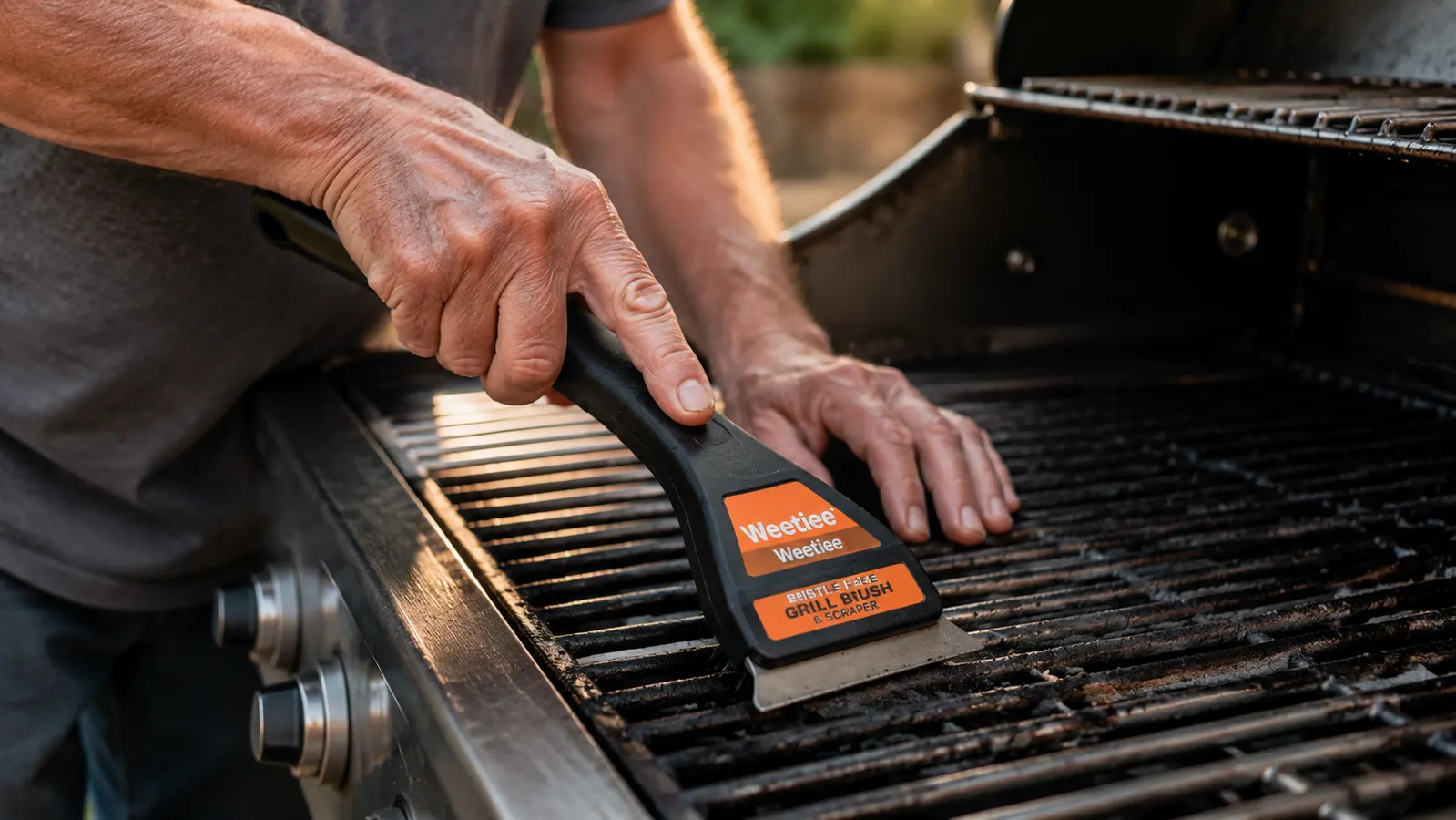
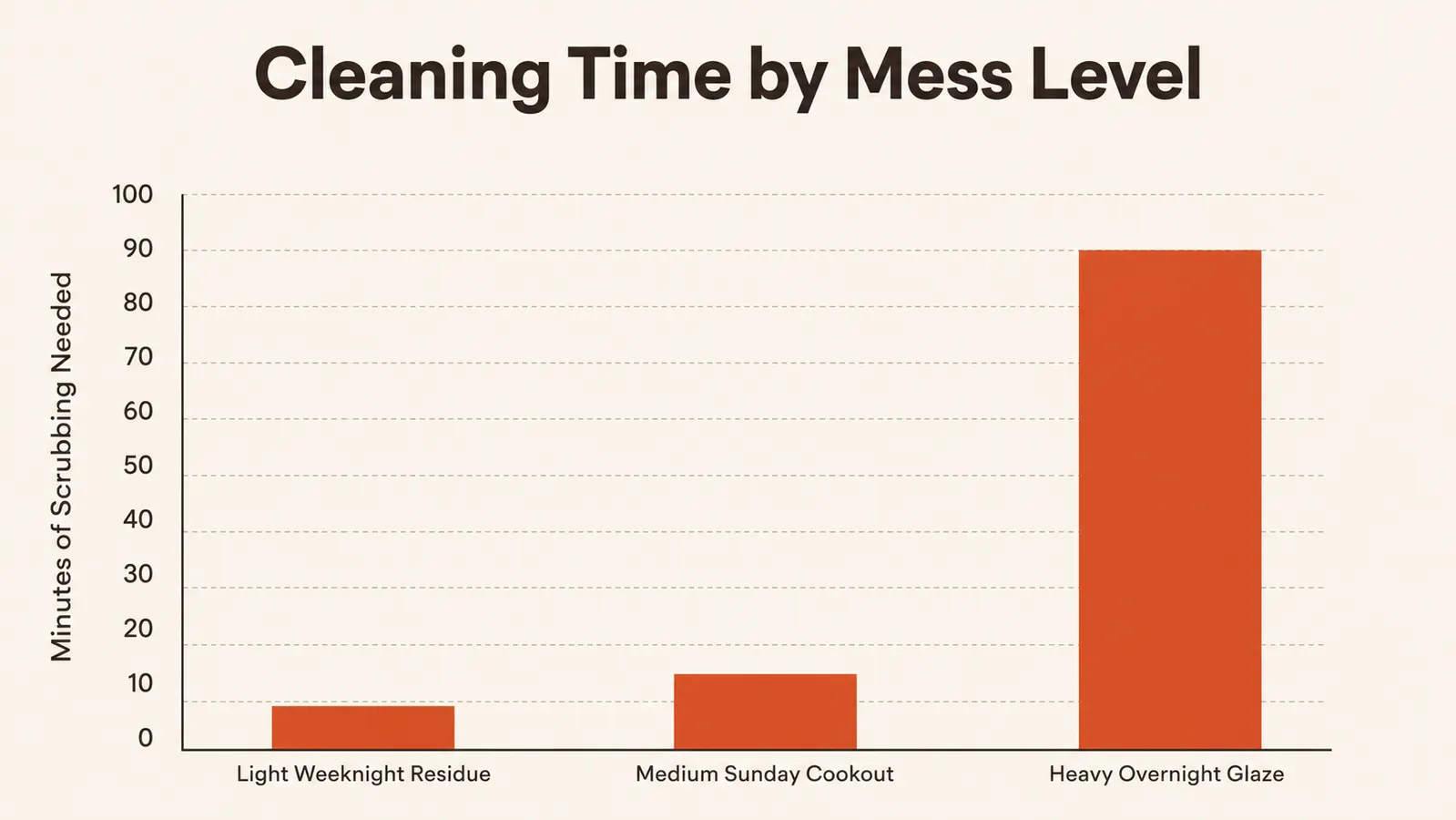
No brand sent me this Weetiee brush and nobody's paying me to say nice things about it, which matters because a lot of the reviews I'd read before buying it read like they were written the same week the box showed up. I wanted to see what it did after real wear, so I split my testing into three rough tiers of mess: the light residue from a normal weeknight burger run, the medium buildup after a full Sunday family cookout, and the heavy stuff, the kind of hardened, caramelized glaze that sits on a grate overnight because you were too tired or too full to deal with it right after eating.
I didn't time every single cleanup with a stopwatch, but for the three tiers above I did track roughly how long each one took me, because that's the number that actually tells you something useful. Light residue, under two minutes. A normal Sunday cookout load, closer to four or five minutes with a mix of the bristle head and scraper edge. The heavy overnight glaze test is where things got interesting, and where I think most reviews stop short of telling you the truth.
The Baked-On Grease Test Nobody Runs
Back to that graduation cookout. By the time the last guest left it was nearly ten at night, and I was not about to go clean grill grates with forty people's worth of dishes still sitting in Diane's kitchen. So I left the Pit Boss closed up overnight with that teriyaki glaze from the chicken thighs baked right onto the stainless grates. The next morning it had hardened into something closer to lacquer than food residue, dark, glossy, and stuck tight in a way that no amount of gentle brushing was going to shift.
I timed it on purpose that morning because I wanted an honest answer for this review. It took me just over six minutes of real, arm-tiring effort to get those grates back to a usable state, working the bristle head first to break up the surface, then leaning hard into the scraper edge at an angle to shear off the worst of it in strips. Compare that to the ninety seconds or so a normal cleanup takes, and you start to understand why so many reviews that only cover the easy stuff give this thing a flawless rating. It worked, but calling it effortless on genuinely hardened glaze would be lying to you.
I ran a second heavy test a few weeks later on the Weber, this time with rendered fat from an untrimmed brisket that had dripped and hardened onto the cast iron over a long low-and-slow cook. Same story. The scraper edge did the real work, the bristle side mostly just helped loosen the surface first. Both times, the brush got there in the end, but both times I finished with a sore forearm and a brush head that looked visibly more worked than it did after any light or medium cleanup.
What the Five-Star Reviews Don't Mention
The plastic-coated handle gets genuinely warm if you don't wait long enough for the grates to cool, and I learned that the hard way during the graduation cookout when I was rushing to clear the grill for the next batch. It's not scalding and it's not a safety hazard exactly, but nobody mentions that the heat travels up the stainless shaft faster than you'd expect if you're working close to a still-hot grate. I've adjusted by giving the grates a full ten minutes now instead of the five I used to allow, and it's a non-issue since I made that change, but it caught me off guard the first time.
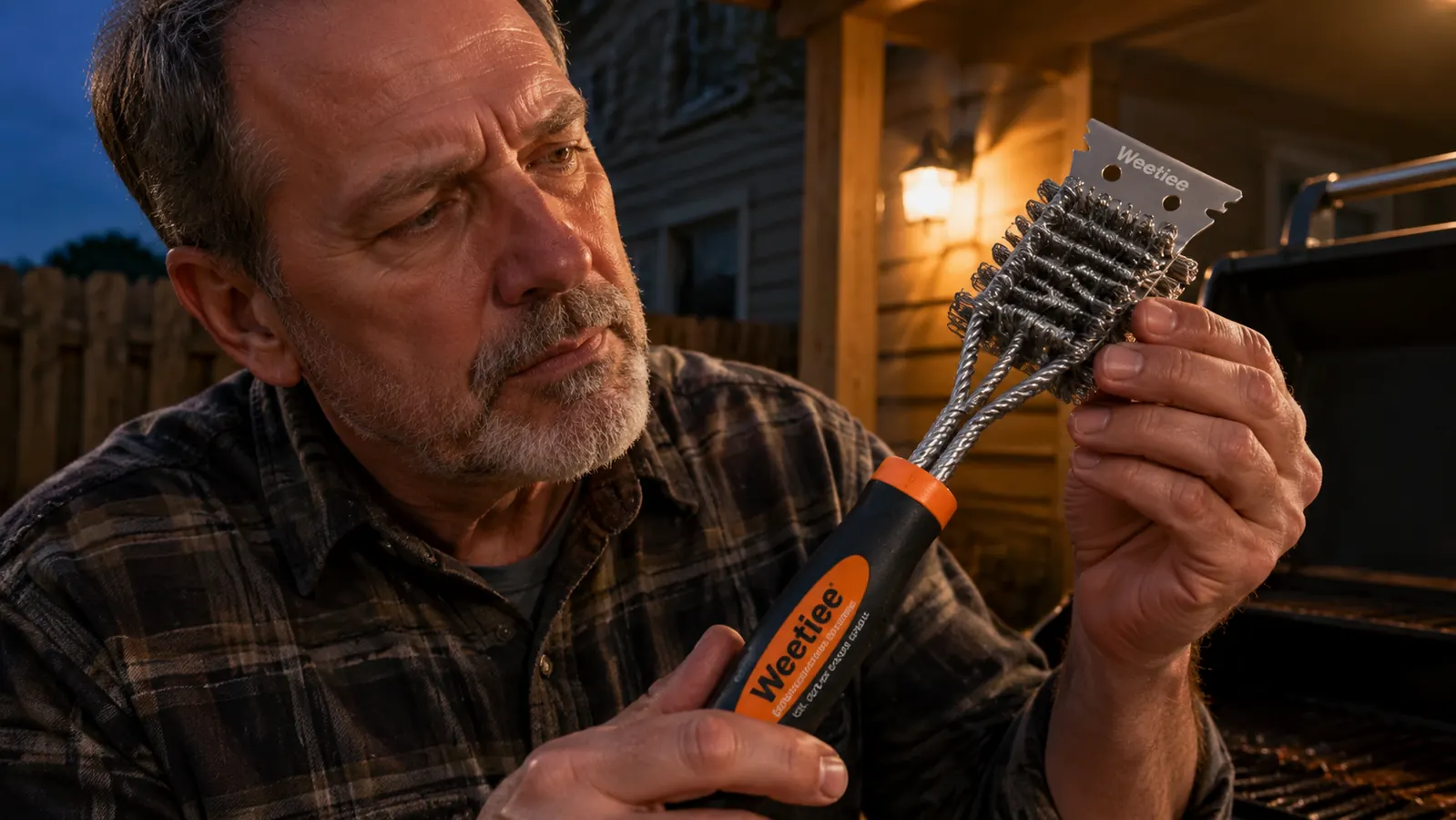
Around the three-month mark I noticed the coil near the very tip, right where it meets the crimp that holds the bristle head together, has a bit more give when I press hard into it than it did when the brush was new. It hasn't unraveled and it still functions fine, but I can feel it, and I've seen a handful of other buyers mention theirs fully coming apart at that same joint after months of heavy use. Mine hasn't gotten there, but I wouldn't call it impossible either, and that's the kind of honest detail that gets left out of a quick five-star writeup.
One more thing nobody warned me about, despite the stainless look of the thing, it is not dishwasher safe, and the product listing barely mentions it. I tossed it in with a load of dishes once out of habit, and while nothing broke, the finish came out duller than before and I decided not to risk it again. It's a hand-wash tool, plain and simple, and that's worth knowing before you assume stainless means dishwasher friendly the way your good flatware is.
The Rust Question Nobody Talks About
In June we got a surprise thunderstorm that rolled through while the brush was clipped to the side of my grill cart, uncovered, for the better part of a day and a half before I noticed. When I finally grabbed it, there were small rust freckles forming near the crimp joint at the base of the head, tiny orange dots you'd have to be looking for to catch. I scrubbed most of them off with a green scrub pad and some elbow grease, and a faint discoloration is still there if you look closely under good light. It hasn't affected how the brush cleans, and it hasn't transferred anything onto my grates, but it's proof that stainless doesn't mean rust-proof under real weather exposure, and that's a detail the marketing copy conveniently leaves out.
Diane noticed it before I did, actually, she was the one who spotted the spots while wiping down the grill cart and asked if I'd bought a cheap brush by mistake. I hadn't, it's just that a coiled stainless head with a lot of surface area and a tight crimp joint is going to trap a little moisture no matter how good the metal is, and if it sits wet long enough, something's going to give a little. Compare that to my actual grill tongs and spatula, which are solid stainless with no crimped joints and have never shown a spot of rust in years out on that same cart, and you can see why the brush's design, not the metal quality, is the real reason for the rust. I keep it under the grill's side shelf now instead of clipped out in the open, and I haven't had the problem since.
Is It Actually Worth Twenty Dollars
At a low price point, the math here isn't complicated, but I want to be honest about what you're getting for that price rather than just saying it's a good deal and moving on. The coiled head loses a bit of its spring after heavy use, the kind of hardened-glaze cleanups I described above wear it down faster than routine cleaning does, so if you're doing a lot of low-and-slow cooks with sticky rubs and glazes, don't expect this exact head to look and perform like new a year from now. Budget for it the way you'd budget for a cheap pair of work gloves, useful and worth replacing rather than a lifetime tool.
Against a basic ten-dollar wire brush from the hardware store, this one loses on raw scrubbing aggression, a fresh wire brush genuinely bites into grime harder. But that wire brush carries the loose-bristle risk that got me looking at bristle-free options in the first place, and once you factor that in, the extra ten dollars this one costs feels like a fair trade for not gambling with what ends up on your family's plate. I'd rather replace this head once a year than go back to wondering what's hiding in the grill grooves.
I also priced out a couple of the premium bristle-free brushes that run at higher price points before settling on this one, and I honestly don't think the extra spend buys you much beyond a slightly thicker handle and a nicer-looking box. The core mechanics, a coiled metal head plus a scraper edge, are close enough across brands in this price range that I'd rather buy two of the cheaper one over two years than one expensive one and hope it never shows the same wear I've documented here.
What We Liked
- Actually cut through hardened, overnight-baked teriyaki glaze, though it took real effort
- Scraper edge is the real workhorse on rendered fat and caramelized sugar
- No rust ever showed up on the grates themselves, even after the brush's own rust scare
- Handle survived repeated heat exposure without cracking or loosening
- Fair price if you treat it as an annual replacement rather than a lifetime tool
Where It Falls Short
- Handle gets noticeably warm if you clean grates before they've cooled enough
- Coil near the crimp joint showed more give after three months of heavy use
- Developed small rust freckles after less than two days left uncovered in rain
- Not dishwasher safe despite the stainless appearance
- Heavy overnight glaze takes real time and arm effort, not the quick wipe the marketing implies
The five-star reviews don't mention the handle gets warm, or that a couple days left out in the rain can leave rust freckles near the base. Mine still works fine. It's just not the flawless tool the star rating makes it look like.
Who This Is For
This brush makes the most sense for someone who wants off the wire-bristle safety risk and doesn't mind a little bit of upkeep in exchange, hand washing it, storing it under cover instead of leaving it clipped out in the weather, and giving the grates that extra couple minutes to cool before you go after anything really baked on. If you're the type who'll actually read a set of care instructions on a twenty-dollar grill tool, you'll get real mileage out of this one.
Who Should Skip It
If you want something you can leave clipped to the grill cart year-round without a second thought, or toss in the dishwasher with everything else, this isn't quite that tool, and I'd rather tell you that up front than let you find out the way I did. And if your idea of grill maintenance is letting grease build up for a month and then attacking it once, know that the heavy-mess test above took real time and effort, closer to six minutes of honest scrubbing than the effortless wipe-down some listings promise.
Still the brush on my hook, warts and all.
Between the graduation-party glaze test and the rust freckles from a rainstorm, this review tells you what actually happens with real use. If that honest track record still sounds like an upgrade over a wire brush, check today's price and availability.
Amazon Check Today's Price on Amazon →