
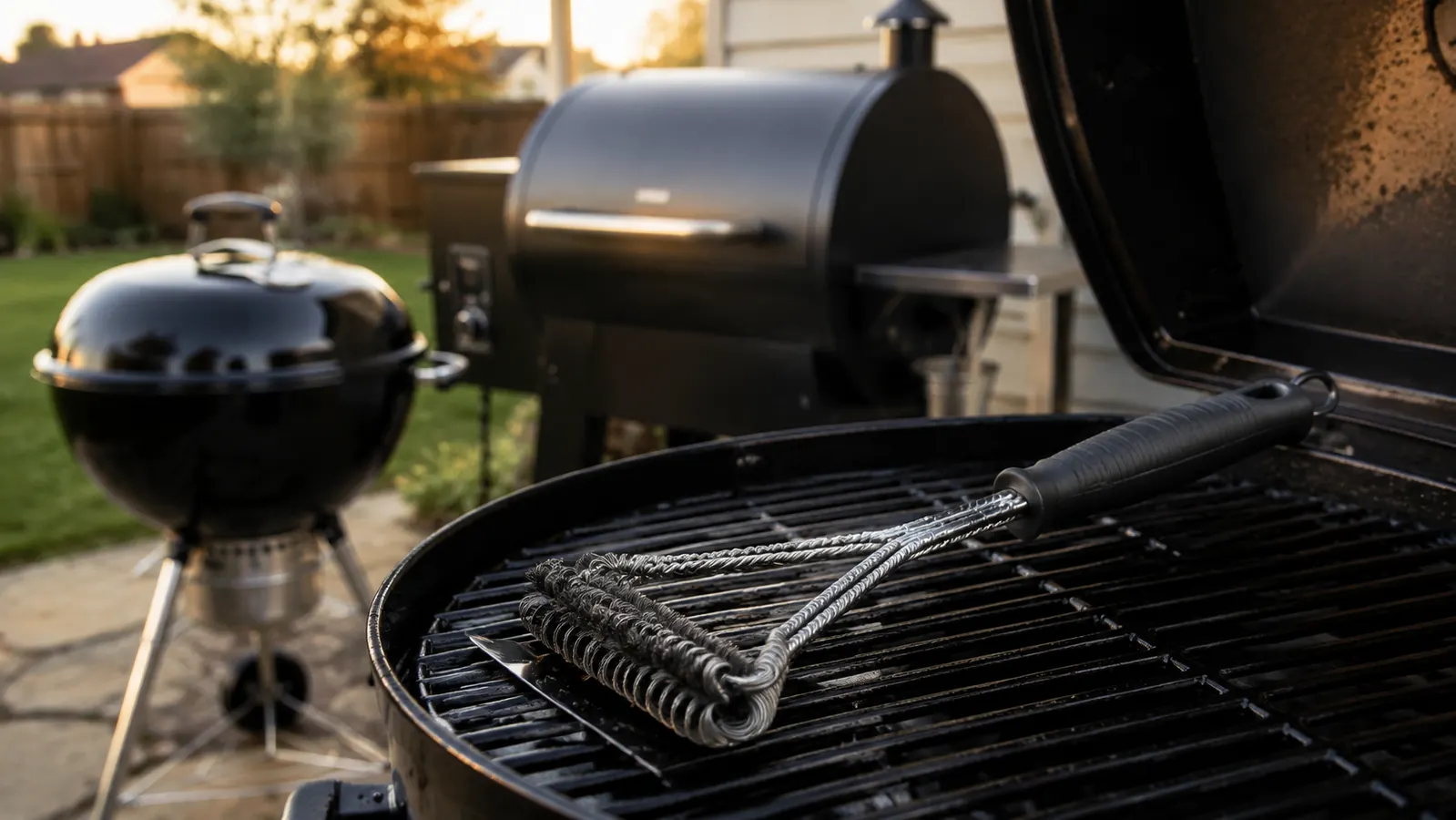
I switched to a bristle-free grill brush after thirty-some years of using the same wire kind my dad used, and I'll be straight with you, it wasn't because I read some scary article. It was because Diane read one and put it in front of me at the kitchen table with a look that said this isn't a discussion. A loose wire bristle can snap off a cheap brush and end up stuck in a burger, and enough people have ended up in the ER over it that I figured thirty years of getting lucky wasn't a strategy. So I picked up the Weetiee bristle-free brush and scraper, an 18-inch stainless tool that swaps the wire coil for a rolled metal bristle design and a flat scraper edge, and I've run it across my Pit Boss pellet grill and my 22-inch Weber kettle for six months now, probably eighty cookouts between the two grills.
This isn't a first-impressions review written after cleaning the grates twice. I've used this brush on cast iron grates on the Weber, stainless grates on the Pit Boss, burnt-on cheese from a smash burger night, and the kind of stuck-on rib glaze that usually takes real elbow grease to shift. Eli, my twelve-year-old grandson, has even taken a turn scraping the grates himself a couple times, which tells you it doesn't take a strongman to get results, or at least it shouldn't.
The Quick Verdict
A genuinely safer alternative to wire brushes that cleaned cast iron and stainless grates well after six months of regular use, though the coiled bristle head shows more wear than I expected and needs a firmer hand on baked-on messes.
Amazon Check Today's Price →Tired of wondering if a loose wire bristle is hiding in tonight's burgers?
The Weetiee bristle-free brush swaps that risk for a coiled stainless design and a built-in scraper edge that handles cast iron and stainless grates without shedding metal onto your food. Here's the current listing so you can check today's price and availability.
Amazon Check Today's Price on Amazon →How I've Used It
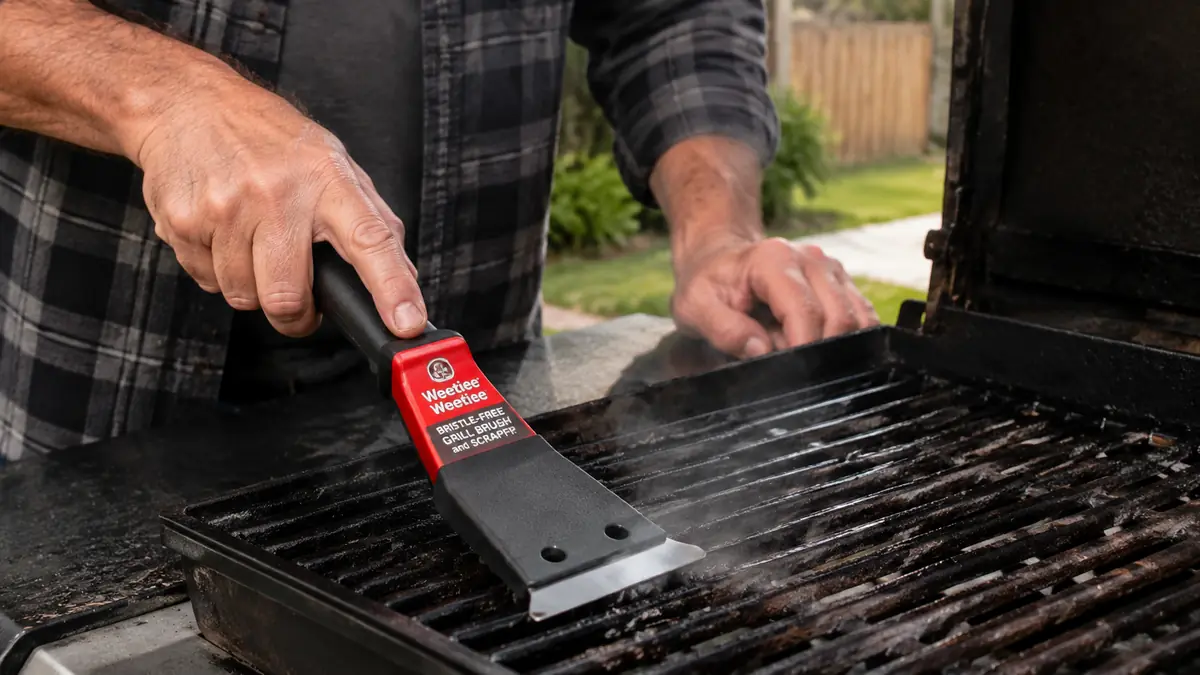
The Weetiee brush is an 18-inch stainless steel tool with a rolled metal bristle head on one end and a flat, angled scraper blade built into the same head. No plastic bristles, no wire coil that can snap off, just tightly wound stainless loops that are supposed to scrub without shedding. I started using it that first week back in January on the Weber kettle, mostly on cold grates before I even lit the charcoal, just to get a feel for how it handled everyday grease buildup.
Where it really got tested was a rack of ribs I did on the Pit Boss in February, the kind with a sticky brown sugar glaze that caramelizes right onto the grate if you're not careful pulling the meat off. I let the grates cool about ten minutes, not fully cold but not scorching either, and worked the brush head across the worst of it. It took more passes than I expected for that first cook, but the scraper edge on the back handled the stubborn caramelized patches once the bristle side had loosened things up.
Since then I've used it after just about every cookout on both grills, probably eighty times total counting the smaller weeknight burger nights and the bigger Sunday cookouts with the whole family over. Diane uses it now too when she's the one manning the Weber, which she wasn't doing with the old wire brush because she didn't trust herself not to leave a bristle behind.
Bristle-Free Design: What It Actually Means for Safety
The whole reason I bought this thing was the bristle safety angle, so let me address that head on. In six months and roughly eighty uses, I have not found a single loose piece of metal on my grates or in my food. That sounds like a low bar, but with the old wire brush I owned before this, I found two separate bristles over about a year and a half of use, once stuck in a grate groove and once, more alarmingly, stuck to a piece of chicken I was about to plate for Eli. That's exactly the scenario Diane was worried about, and it's exactly what pushed me to switch.
The design reason for that is straightforward once you handle the brush. Instead of individual wire bristles crimped into a head, which is what eventually corrodes and snaps under heat and friction, the Weetiee uses continuous coiled stainless loops. There's nothing to break off in the traditional sense because there's no individual bristle end sticking out to begin with. I inspected the head closely after about three months, holding it up to the porch light and running my thumb across it, and while the coils were flattening slightly from wear, I didn't find any sharp broken ends.
I'll be honest that I still do a visual check of my grates before I put food on them, wire brush habits die hard after thirty years, but I've stopped doing the paranoid close-up inspection I used to do with the old brush. That alone has been worth the switch for our family, especially with Eli around the grill more often now that he's old enough to help.
Cleaning Power on Cast Iron and Stainless Grates
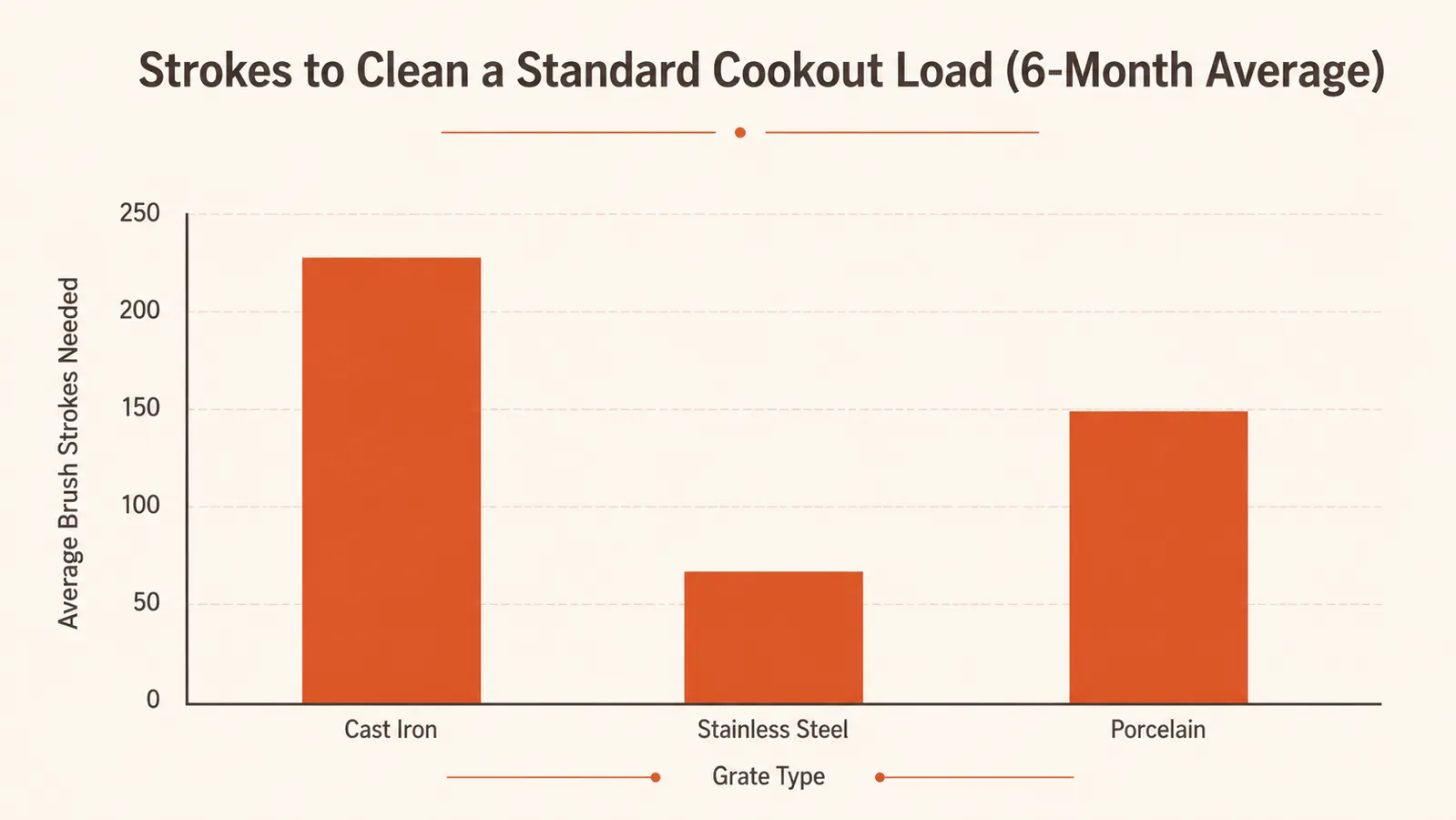
My Weber kettle has cast iron grates, and my Pit Boss has stainless. That's given me a good side-by-side over six months of exactly how this brush performs on the two most common grate materials backyard grillers deal with. On the stainless grates on the Pit Boss, the brush has been consistently effective, a handful of firm strokes on light residue and it comes up clean, no residue lingering in the grooves the way I've seen with some cheaper scrapers that don't sit flush against the metal.
Cast iron on the Weber is a different story, and not because the brush fails there, but because cast iron just holds onto grease and char more stubbornly by nature. On a heavy night, burgers with cheese that dripped and burnt onto the grate, or that rib glaze I mentioned earlier, I need more passes than I do on the stainless side, sometimes twice as many strokes to get the grate back to a clean, matte black finish. That's not really a knock on the brush so much as it's the nature of cast iron, but if you're expecting the same effort level across grate types, temper that expectation.
The scraper edge built into the back of the head has honestly become the tool I reach for most on the tough spots. For anything really baked on, I flip the brush around, use the flat edge at an angle against the grate, and it shears off caramelized sugar or burnt cheese in a way the bristle side alone can't quite manage. I didn't expect to use that side as much as I have, but it's probably a third of my total cleaning time on a heavy cookout night.
Six Months of Wear: What's Held Up and What Hasn't
This is the part most reviews skip because they're written after a week or two, and it's the part that actually matters if you're deciding whether to spend money on this over a cheaper option. The stainless coiled head has held its shape reasonably well, but it has flattened some, especially in the center where I do most of my scrubbing motion. It's not falling apart, and it still cleans effectively, but it doesn't look brand new the way it did in month one.
The scraper edge has stayed sharp enough to be useful, though I noticed a slight rounding on one corner around the four-month mark, probably from the angle I favor when I'm working on the Pit Boss grates. It hasn't affected performance in any way I can point to, but I mention it because I want this review to reflect reality and not just the honeymoon period every gadget gets in week one.
The handle itself, a molded plastic grip over the stainless shaft, has held up completely fine. No cracking, no loosening where it meets the metal, and it's been through plenty of heat exposure since I don't always wait for the grates to cool all the way down before I clean them. I do wipe the whole brush down and let it air dry after use rather than leaving it out in the weather, and I think that's helped keep it in decent shape this far in.
What I Considered Before Buying This One
Before the Weetiee, I'd been using a standard wire bristle brush for most of my grilling life, the kind you can grab at any hardware store for ten bucks. It worked fine on cleaning power, honestly better in some ways since a fresh wire brush bites into grime aggressively, but it's exactly the design that's been recalled and warned about for years because of the loose bristle problem. Once Diane put that article in front of me, I wasn't interested in rolling those dice anymore, especially with Eli around the grill.
I also looked at a couple of the wooden scraper paddles that have gotten popular, no metal at all, just a shaped wood block you work against the grates. I tried a buddy's at a cookout and honestly wasn't impressed, it took real muscle to shift anything stuck on, and it didn't have a scraper edge sharp enough for the caramelized stuff I deal with on ribs. The Weetiee's stainless coil plus built-in scraper struck the best balance for me between real cleaning power and giving up the wire bristle risk entirely.
What sealed it was the price relative to what I was getting. At the low end, it's not a huge gamble, and even accounting for the wear I've seen over six months, it's outlasted what I expected from something in that price range. I'd rather replace a brush head like this once a year than go back to worrying about wire bristles in my food.
What We Liked
- Zero loose bristles found in food or grates across six months and roughly eighty uses
- Scraper edge handles caramelized glaze and burnt cheese better than the bristle side alone
- Performed consistently well on stainless grates with minimal effort
- Handle has held up completely through repeated heat exposure
- Price makes it easy to justify replacing the head annually if wear continues
- Simple enough that my grandson can use it safely under supervision
Where It Falls Short
- Coiled bristle head has visibly flattened, especially in the center scrubbing zone
- Needs noticeably more passes on cast iron than on stainless grates
- Scraper corner showed slight rounding around the four-month mark
- Not as aggressive on heavy baked-on residue as a fresh wire brush would be
In six months I haven't found a single loose bristle on my grates or in our food. That's the whole reason I bought this thing, and it's delivered on exactly that.

Who This Is For
If you're still running a wire bristle brush and you've got kids or grandkids around the grill, or honestly even if you don't, this is a straightforward upgrade that removes a real risk without giving up much cleaning power. It's also a solid pick if you clean your grates regularly after every cookout rather than letting buildup pile up for weeks, since it performs best with consistent light-to-moderate use rather than being asked to strip years of neglect off in one go.
Who Should Skip It
If your grates are heavily neglected, months of baked-on grease and char with no regular cleaning, this brush is going to ask a lot more of your arm than a fresh wire brush would, at least for that first deep clean. And if you're the type who wants to buy a grill tool once and never think about wear again, know that the coiled head does flatten with heavy use over time, so budget for replacing it every season or two rather than expecting it to look and perform exactly like day one forever.
Six months in, this is still the brush hanging on my grill hook.
If you're ready to stop worrying about loose wire bristles ending up on your plate, the Weetiee bristle-free brush and scraper gets grates clean without that risk. Check the current listing for today's price and availability.
Amazon Check Today's Price on Amazon →