

My neighbor Gary leaned over our shared fence back in June and asked me straight out whether the MEATER Plus was worth his money, because he'd watched me checking my phone at the last block party instead of hovering over the grill and wanted the honest version, not the version on the box. I gave him the same answer I'm about to give you. Yes, it's worth it, but not entirely for the reasons the marketing leads with, and there are a handful of things about this thermometer that took me most of a summer to figure out on my own, usually the hard way.
I've been grilling in this Kansas City backyard for more than thirty years, and I don't warm up to gadgets easily. This one has earned a permanent spot in my kitchen drawer, but only after I ran into a few blind spots that nobody mentions in the glossy product photos or the five-star reviews. This is the version of the review I'd actually give a buddy at a cookout, not the polished one.
The Quick Verdict
A dependable probe for everyday grilling once you know its real limits, from the single-probe squeeze at a busy cookout to a searing ceiling nobody prints on the packaging.
Amazon Check Today's Price →Before it goes in your cart, here's what the product page leaves out.
The MEATER Plus is a genuinely useful tool once you know how to work around its quirks. Check today's price and see the current listing for yourself.
Amazon Check Today's Price on Amazon →How We Tested
I didn't just run this thing through a few quiet weeknight steaks and call it a review. The real test came at our Fourth of July gathering, when my brother-in-law Doug showed up with three racks of ribs and two spatchcocked chickens and expected me to have this whole operation dialed in with my fancy new gadget. That single afternoon taught me more about this thermometer's actual limits than the previous month of solo cooks combined.
Between that party and a full summer of regular use on my Pit Boss pellet grill and my 22-inch Weber kettle, I've put this probe through weeknight pork chops, weekend ribs, a couple of reverse-seared strip steaks, and enough chicken thighs that Diane started rolling her eyes at the app notifications going off during dinner. I wasn't looking for a highlight reel here. I was looking for the moments where the thing let me down, because that's the part a buddy actually needs to hear before he spends his money.
What follows isn't a takedown. It's the stuff that surprised me, some of it small and some of it worth knowing before you're standing in your own backyard on a holiday weekend wondering why the app went quiet.
I also made a point of switching which grill did the heavy lifting each week, rather than leaning on the Pit Boss every time, since a lot of the range and connection quirks people complain about online seem to depend heavily on where the charging block sits relative to a metal grill body. Rotating between the pellet grill and the kettle gave me a more honest read on how this thing behaves in different setups, not just the one that happened to be most convenient for a review.
The One-Probe Problem Nobody Mentions
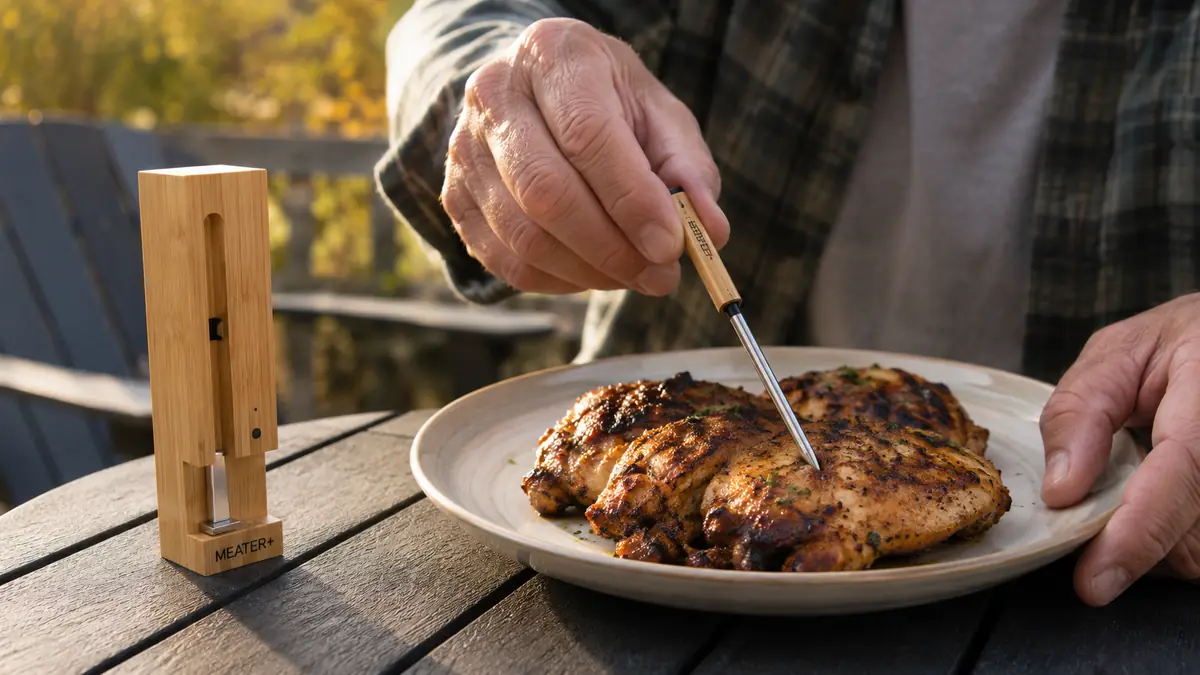
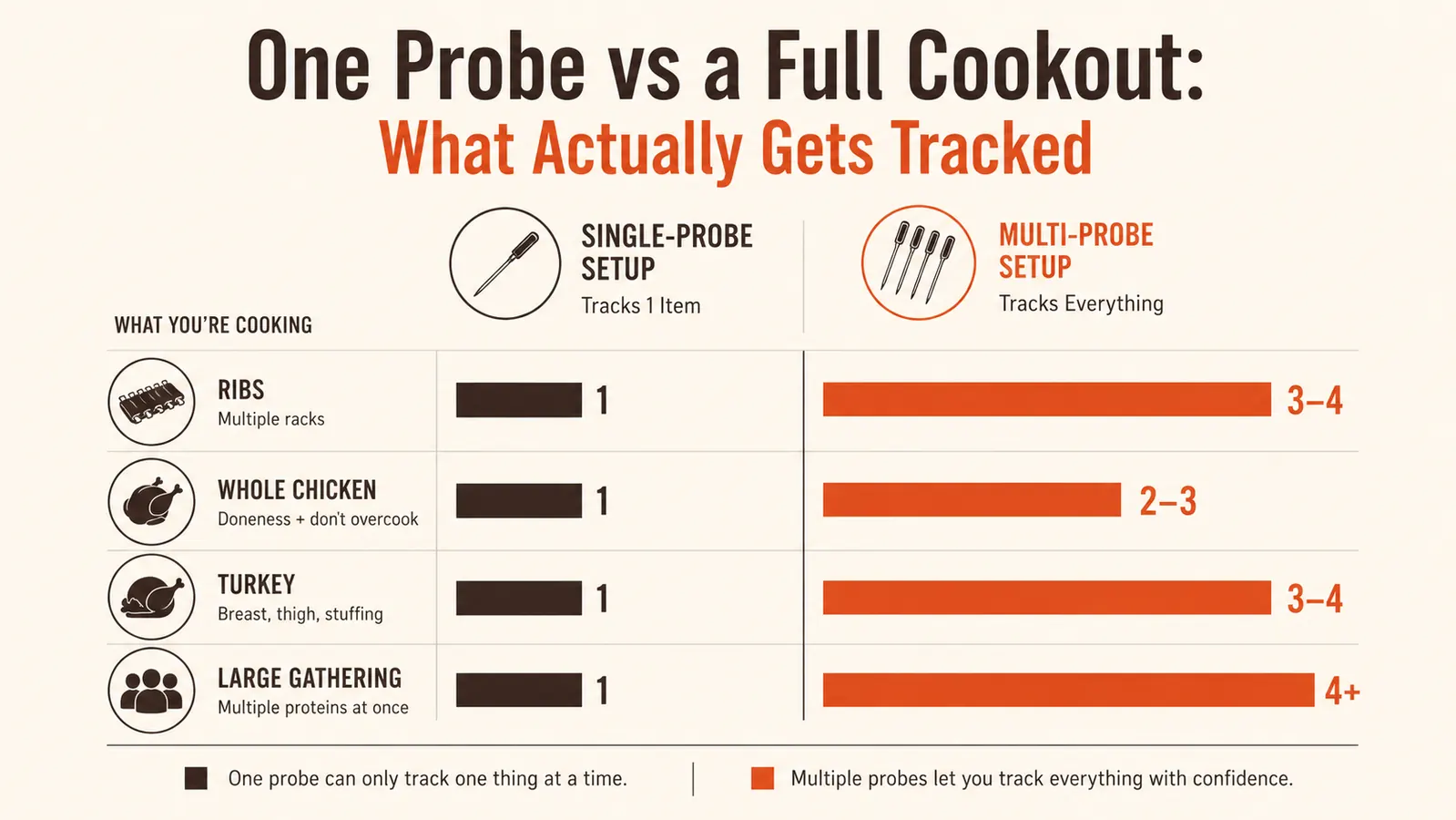
Here's the thing the box doesn't spell out clearly enough. The MEATER Plus you're looking at is a single probe. One probe, one piece of meat, at a time. That sounds obvious once you say it out loud, but it didn't fully register with me until that Fourth of July cookout with Doug's three racks of ribs and two chickens, plus a brisket I already had going on the Pit Boss.
I spent a good chunk of that afternoon pulling the probe out of one cut, wiping it down, and reinserting it into the next, trying to get a rotating sense of where everything stood. It worked, technically, but it wasn't the hands-off experience the marketing implies. I lost track of exact times more than once because I was juggling five different pieces of meat with one sensor, and I ended up going back to eyeballing doneness on the ribs the old-fashioned way just to keep the afternoon moving.
If you're the type who hosts big family cookouts regularly, this single-probe version is going to feel like it's built for a solo cook or a couple of steaks, not a full spread. MEATER does sell a multi-probe version for exactly this reason, and if I'd known how often I'd be juggling multiple cuts at once, I might have looked harder at that option before settling on the Plus.
These days I've worked out a rough system for it. I start the probe in whichever cut needs the longest cook time, usually the brisket or a pork shoulder, and check the rest by hand on a timer, moving the probe over only in the final stretch when precision matters most. It's a workaround, not a fix, and it means I'm still relying on decades of eyeballing doneness for everything the probe isn't currently in. A buddy who's newer to grilling won't have that fallback to lean on.
The Searing Ceiling Nobody Prints on the Box
This one cost me a melted cap and a mild scare. A few weeks after the Fourth of July, I was reverse-searing a strip steak on the Weber kettle, moving it over a bank of hot direct coals for that final crust after slow-cooking it on the cooler side. I got distracted talking to Doug on the patio and left the probe in place a beat too long while the steak sat directly over the coals for the sear.
The probe housing isn't built to sit directly over open flame for an extended stretch, and I noticed the plastic cap near the connector end had gone slightly warped and discolored afterward. It still worked fine, but it was a clear reminder that this thing is designed for closed-lid, indirect ambient heat tracking, not for riding along through a hard direct sear. Nothing in the instructions I'd skimmed before that first use made that limitation obvious to me.
Now I pull the probe out entirely before any direct-flame finishing sear and check doneness with my old instant-read for that last minute or two. It's a small extra step, but it's one I wish someone had told me about before I found out by melting a cap on my own patio.
I went back and read through MEATER's own guidance after that scare, and buried in the fine print is a clear warning about keeping the probe away from open flame and away from the direct high-heat zone on a grill. It's there if you go looking for it, but it's not the kind of thing most people read before their first cook, myself included. I'd rather a buddy hear it from me at a cookout than find out with a melted cap of his own.
Little Things That Add Up
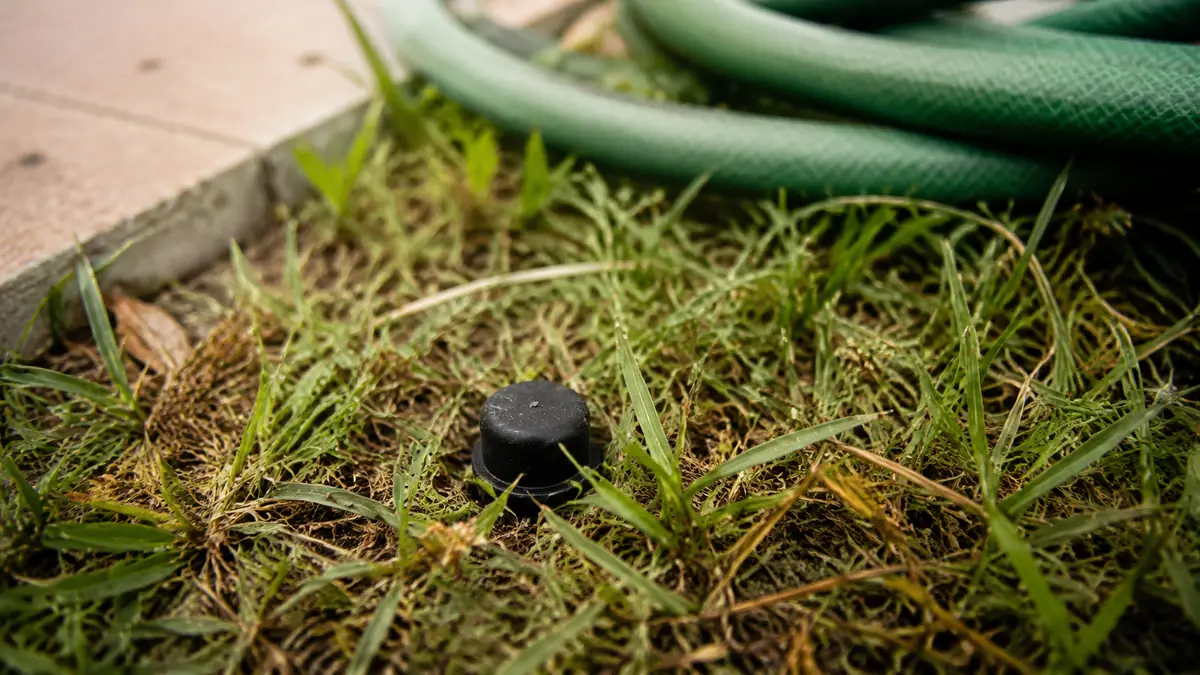
There's a small silicone cap on the charging block that covers the probe's connector port, and I have lost that cap in the grass twice this summer. It's black, it's small, and it blends right into a lawn that hasn't been mowed in a few days. I found the first one eventually. The second one is probably still out there somewhere near the hose bib, and I've since started setting the block on the patio table instead of the side shelf near the grass whenever I'm cooking.
I've also noticed a faint discoloration starting to build near the tip of the probe after repeated exposure to salt on rubbed ribs and brined chicken. It hasn't affected the readings as far as I can tell, but it's a visible reminder that a quick wipe-down after every cook matters more with this thing than it did with my old wired probe, which I used to just hose off without a second thought.
The AA battery door on the charging booster is another small annoyance. It's a thin plastic latch, and on my particular unit it's gotten looser with repeated opening, to the point where I'm careful setting the block down now so the door doesn't pop open on its own. None of these are dealbreakers by themselves, but stacked together they're the kind of thing a buddy deserves a heads-up about before he buys.
A replacement cap runs a few dollars if you order one separately, which isn't a huge deal, but it's an extra step and an extra wait if you lose yours right before a weekend cookout the way I did. I've started keeping a spare in the kitchen junk drawer now, next to my meat thermometer batteries and skewers, just so a missing cap never turns into a delay on a Saturday morning.
The App's Real Weak Spot: Notifications You Don't Get
The single biggest letdown all summer wasn't the range or the probe itself. It was a missed notification on a batch of chicken thighs at that same Fourth of July gathering. My phone had quietly switched into a battery-saving mode sometime that afternoon, the kind that restricts background app activity to stretch the charge through a long day outdoors, and the MEATER app's push alert for target temp never came through.
By the time I happened to open the app manually to check on things, the thighs had run a good ten degrees past where I wanted them. Nothing burnt, nothing inedible, but noticeably drier than they should have been, and Diane noticed. I've since learned to double-check that battery saver mode is off before a big cook, and I keep the app open on the screen during anything I really can't afford to overcook, rather than trusting the notification alone.
It's a small habit to build, but it's exactly the kind of thing that isn't mentioned anywhere in the setup instructions. The app is genuinely well designed for what it does. It just assumes your phone is going to behave itself in the background all afternoon, and on a busy holiday with a dozen other things pulling at your attention, that's not always a safe assumption.
I tested this same scenario on Diane's phone a few weeks later, on purpose, to see if it was just my settings causing the problem. Same result. Her phone had its own version of a background restriction turned on by default, and the notification came through late there too. That told me this isn't a one-off glitch on my particular device, it's a real gap between how modern phones manage battery life and how the app expects to run in the background all afternoon.
Is It Actually Worth the Price
Here's the honest math I gave Gary over the fence. You're paying a real premium for the wireless freedom and the ambient sensor built into one probe, compared to a basic wired thermometer that costs a fraction as much. If all you cook is the occasional weeknight steak, a cheaper option probably does the job fine. But if you value being able to walk away from the grill entirely, whether that's to sit with Diane on the patio or duck inside for a ballgame, that convenience is where the extra cost actually pays for itself.
Where I told Gary to think twice is if he's regularly hosting bigger family gatherings the way Doug and I ended up doing on the Fourth. In that case, one probe stretched across five cuts of meat is going to feel like a compromise no matter how good the app is, and he might be happier starting with the multi-probe version instead of upgrading later like I'm now considering.
I priced out a couple of the cheaper wired alternatives at the hardware store while I was thinking this through for Gary, and most of them landed at less than half what I paid for the MEATER Plus. They'll get the job done for someone who's happy standing at the grill the whole time. But once you factor in what an extra hour of your Saturday is actually worth, standing outside instead of sitting with your family, the math tips back in the MEATER's favor for most people I know, myself included.
What We Liked
- Genuinely frees you from standing at the grill on longer cooks once you understand its limits
- App notifications work well as long as your phone's battery saver settings are checked first
- Ambient sensor gives a real read on grill temp without buying a second gadget
- Held up fine through a full summer of steaks, chicken, ribs, and pork chops
- Easy enough that Diane uses it without needing help from me
Where It Falls Short
- Single probe becomes a real juggling act at bigger cookouts with multiple cuts going at once
- Probe housing isn't built for extended direct-flame searing, learned that one the hard way
- Small silicone connector cap is easy to lose in the yard
- Salt exposure leaves visible discoloration near the tip if you skip the wipe-down
- Missed a notification once when my phone's battery saver quietly blocked it
Gary asked me for the honest version, not the version on the box. So did you, probably, or you wouldn't still be reading this far down.
Who This Is For
This is the right buy for someone cooking mostly solo or for a couple of cuts at a time, who wants to walk away from the grill during a long smoke without babysitting it, and who's willing to build a couple of small habits, checking phone settings before a big cook, wiping the probe down after salty rubs, pulling it before a hard sear. If that sounds like reasonable maintenance rather than a dealbreaker, you'll get real value out of it.
Who Should Skip It
If you're regularly hosting cookouts with four or five different cuts of meat going at once the way Doug and I ended up doing on the Fourth of July, a single probe is going to leave you frustrated no matter how good the app is, and you're better off looking at a multi-probe setup from the start. And if you're not the type to remember a phone setting or two, the missed-notification risk is worth weighing before you buy.
Now you know the quirks. Here's the honest bottom line.
Once you know its real limits, the MEATER Plus earns its keep for everyday grilling. Check the current listing for today's price and availability.
Amazon Check Today's Price on Amazon →