

I've been grilling in my backyard here in Kansas City for over thirty years now, and for about twenty-eight of those years, I overcooked chicken on a fairly regular basis. Not burned to a crisp, nothing that dramatic. Just dry. The kind of dry where Diane would take one bite, give me a look, and reach for the barbecue sauce bottle without saying a word. That look told me everything. What finally broke that streak, after all those dry dinners, was a little wireless meat thermometer called the MEATER Plus. But let me back up and tell it right.
I want to be clear, I'm not new at this. I've run a Weber kettle since the Clinton administration and added a Pit Boss pellet grill a few years back when my knees started telling me they'd rather not stand over charcoal for four hours on a Saturday. I know how to build a fire, I know how to manage smoke, I know how to trim a brisket. But chicken breast, specifically, kept beating me. Every single time.
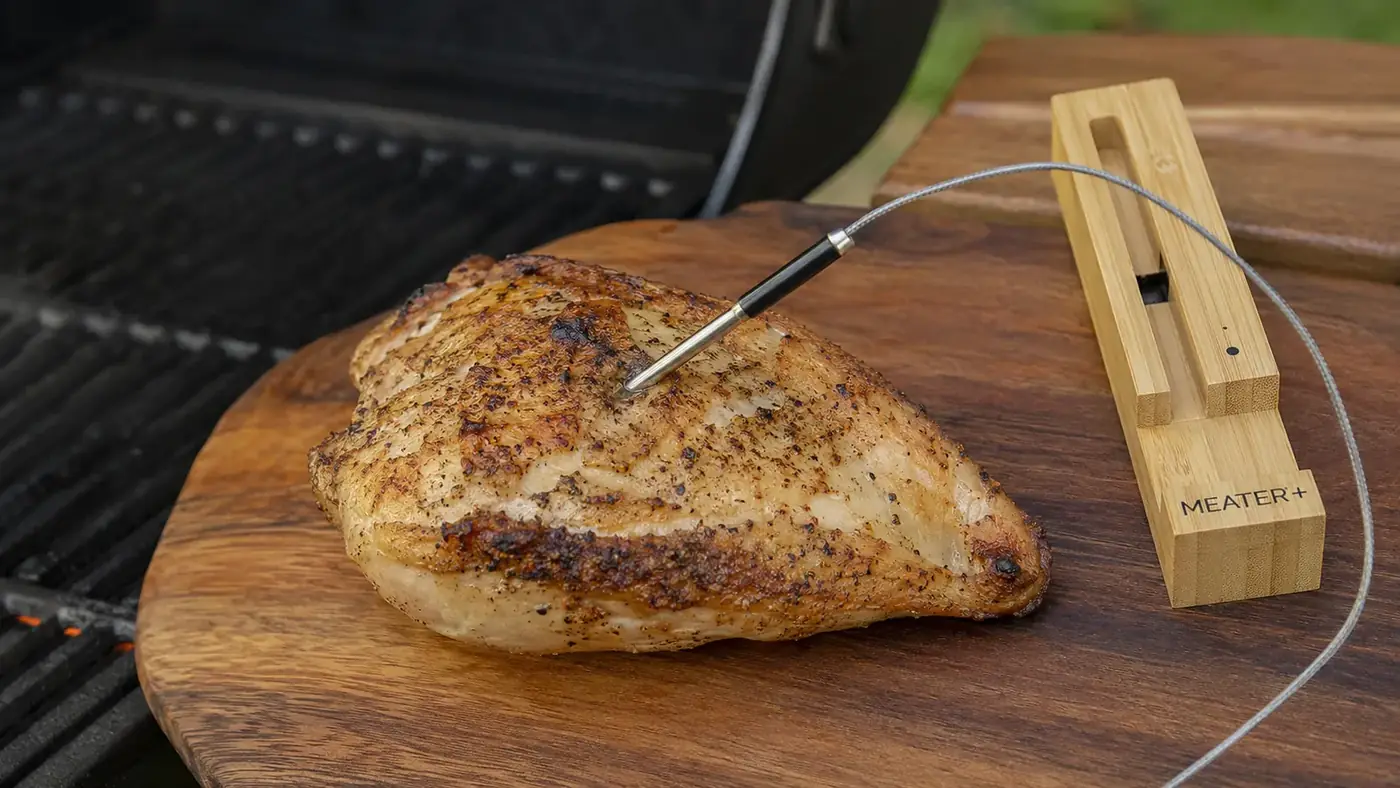
The problem, if I'm honest with myself, was that I was cooking by clock and by cutting into the meat to check it. Twenty minutes a side, give or take, then a slice down the middle to look for pink. Which sounds reasonable until you realize that by the time you've cut into a chicken breast to check it, you've already let a good chunk of the juice run out onto the cutting board. You're checking doneness by destroying the thing you're trying to keep juicy. Nobody tells you that when you're starting out. You just figure it out the hard way, one dry Sunday dinner at a time.
My neighbor Gary, two houses down, is the guy who first put a bug in my ear about a wireless thermometer. He'd had one for about a year and kept mentioning it over the fence while I was out there squinting at my grill thermometer like it owed me money. Gary's not a gadget guy. He's retired from the phone company, drives a truck that's older than my youngest grandson, and doesn't buy things just because they're new. So when he told me his MEATER Plus had basically ended his own overcooking problem, I actually listened.
I wasn't checking doneness anymore. I was watching it happen in real time from my phone, standing by the fence talking to Gary instead of hovering over the grill.
I put off buying one for a few months out of pure stubbornness. Thirty years of grilling and I'm going to need a phone app to cook chicken? That's what I told myself, and honestly it's a little embarrassing to admit that pride kept me eating dry chicken longer than it needed to. But after a Fourth of July cookout where I dried out four chicken thighs in front of my daughter's in-laws, I ordered one that same week.
The Thermometer That Ended My Guessing Game
If you're tired of cutting into chicken to check it, or pulling steaks off ten minutes early just to be safe, this is the fix. Wireless probe, phone alert when it's time to pull.
Amazon Check Today's Price on Amazon →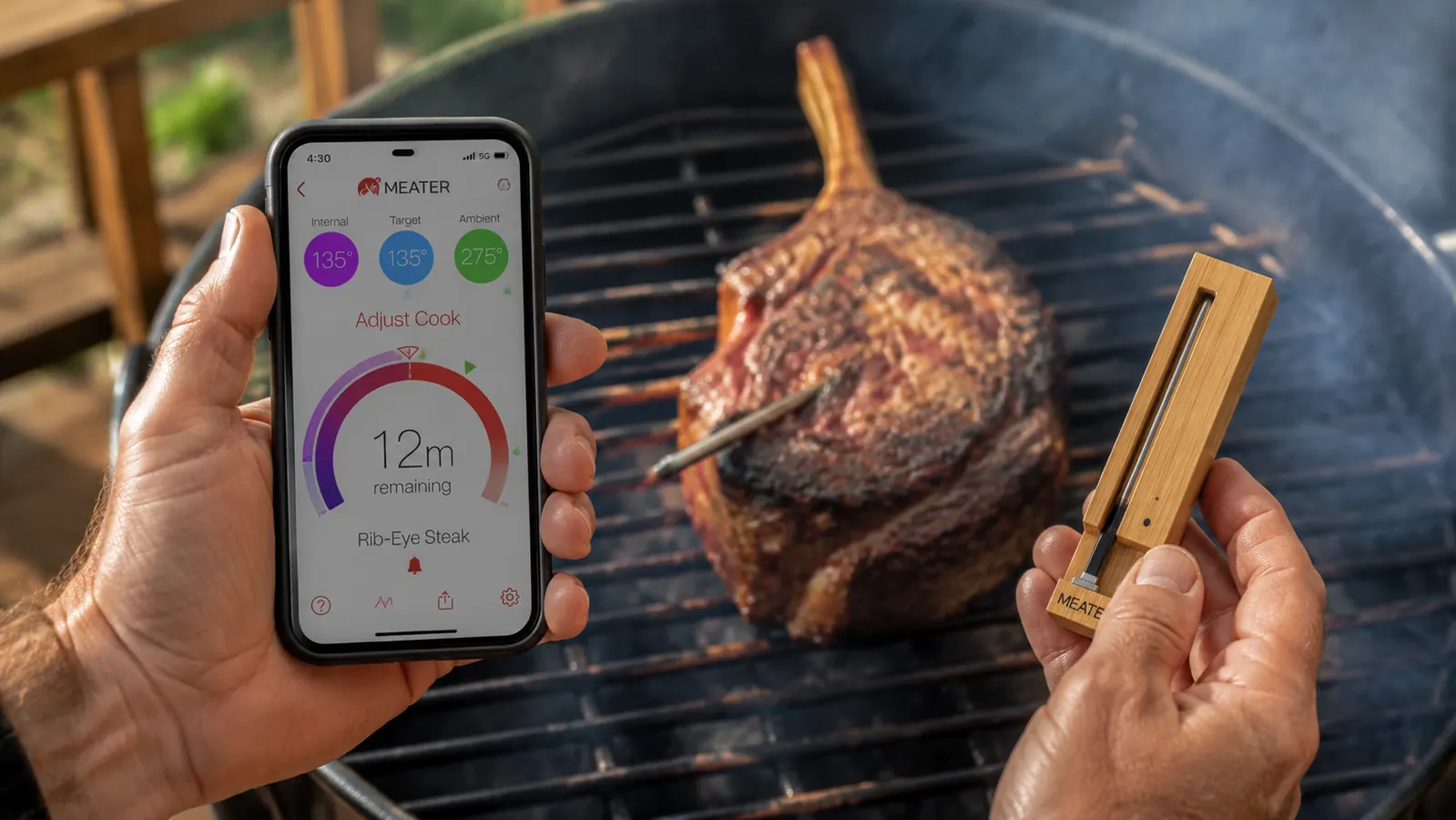
The first time I used it was on a Tuesday night, nothing fancy, just chicken breasts for Diane and me. I inserted the probe, set the target for poultry in the app, and then did something I almost never do while grilling. I walked away. I went inside, sat down, and watched the temperature climb on my phone screen while Diane finished up something in the kitchen. No hovering, no lifting the lid every four minutes to peek and letting all the heat out.
When the app told me I was fifteen degrees out, I went back outside and just watched the last stretch happen in real time. It buzzed my phone right at target internal temp. I pulled it, let it rest under foil for the resting time the app suggested, and cut into it at the table instead of on the grill. First juicy chicken breast I'd made in longer than I want to admit.
Since then I've used it on pork chops, a couple of turkey breasts around the holidays, and steaks for my grandson Eli, who is twelve and has very strong opinions about his steak being pink but not too pink. The probe reads both the internal meat temp and the ambient temp around it, which matters more than I expected on the Pit Boss, since pellet grills can drift in temperature more than people admit.

It's not magic. The wireless range from the probe to my phone through the app's relay box is solid on my patio, but I've heard from other guys in a grilling group I'm part of that it can get spotty if you've got a brick wall or a lot of interference between the grill and the house. Mine sits about twenty feet from my back door and I've never lost the connection, but your setup might be different, so it's worth knowing that going in.
The probe itself is also not something you want to run through a dishwasher or leave soaking, and the charger base needs to stay dry, which means I keep it in the kitchen instead of leaving it out by the grill where I'd naturally want to. Small adjustment, but a real one.
What I'd Tell You If We Were Sitting at My Kitchen Table
If you asked me straight, over coffee at my kitchen table, whether this is worth it, I'd tell you the truth. It's not going to make you a better cook overnight, and it won't fix bad technique on the fire management side. What it does is take the guessing out of the one part of grilling that ruins more good meat than anything else, not knowing exactly when to pull it. For seventy nine dollars, it paid for itself the first time it saved me from serving dry chicken to company. Ask Gary. Ask Diane. Just don't ask me about that Fourth of July plate of thighs, because I'd rather not relive it.
Stop Guessing, Start Watching the Temp Climb
This is the same wireless thermometer that got me out of the overcooked-chicken rut. Simple to use, works across grill, oven, and smoker.
Amazon Check Today's Price on Amazon →